
How Water-Resistant Materials Shape Modern Smartphone Design
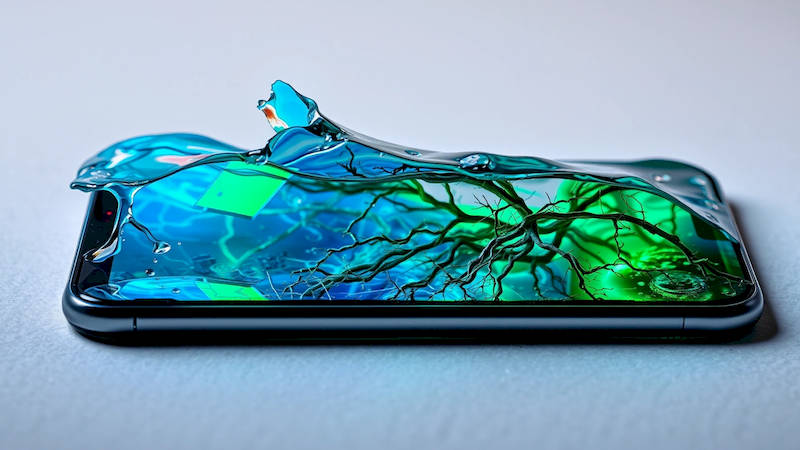
Modern smartphones are no longer simply communication devices; they're extensions of our lives, meticulously engineered companions that accompany us through nearly every situation. This ubiquity demands durability. While processing power and camera capabilities often dominate headlines, the silent revolution in material science – specifically the advancements in water resistance – has profoundly reshaped smartphone design. No longer are consumers accepting devices crippled by accidental spills or rain showers. This demand has driven manufacturers to innovate with specialized materials, sealing techniques, and coatings, fundamentally altering how smartphones are constructed and what consumers expect. This article will delve deep into the materials and methods behind water resistance in smartphones, charting its evolution, exploring the design implications, and examining the future direction of this crucial technology.
The early days of "water resistance" often meant quickly grabbing a plastic bag. The introduction of water-repellent coatings was a first step, but truly reliable protection required a far more systematic approach. The evolution of Ingress Protection (IP) ratings provides a useful timeline. Initially, even a splash could be catastrophic. Now, we have devices certified to withstand immersion in up to several meters of water for extended periods. This progress isn’t just about surviving accidents; it allows for entirely new design possibilities, freeing manufacturers from the constraints of keeping electronics completely dry. The constant pursuit of enhanced water resistance has become a key differentiator in a saturated market, pushing material science and engineering to their limits.
- The Science of Sealing: From Gaskets to Adhesives
- Hydrophobic Coatings: The Invisible Shield
- Material Selection: Beyond Aesthetics and Strength
- The Impact on Port Design & Speaker Technology
- IP Ratings: Decoding the Standards & Limitations
- The Future of Water Resistance: Self-Healing Materials and Beyond
- Conclusion: A Seamless Integration of Materials and Design
The Science of Sealing: From Gaskets to Adhesives
Traditionally, and still vitally, waterproofing centered around preventing liquid ingress through openings – ports, buttons, seams, and speaker grilles. Early water resistance relied heavily on physical barriers such as rubber gaskets and seals. These were effective, but added bulk and were susceptible to degradation over time, particularly from temperature fluctuations and UV exposure. Modern smartphone designs have significantly advanced beyond these rudimentary approaches. Sophisticated adhesives have emerged, creating waterproof bonds between components and housing. These aren’t your average glues; they’re engineered with specific viscoelastic properties. This means they maintain a strong seal while allowing for subtle expansion and contraction of materials due to temperature changes, preventing cracks and ensuring a long-lasting barrier.
Furthermore, manufacturers now employ plasma welding to fuse internal components, creating impermeable seals at a microscopic level. This technique is particularly crucial in areas around the display and battery. Polyurethane-based adhesives are also increasingly common, offering a blend of strength, flexibility, and resistance to chemicals. Crucially, the success of these sealing methods is dependent on meticulous assembly processes. Even the smallest imperfection in a seal can compromise water resistance. Automated assembly lines, coupled with rigorous quality control checks, are paramount to ensuring the integrity of the waterproofing system.
Hydrophobic Coatings: The Invisible Shield
Beyond physical barriers, hydrophobic (water-repelling) and oleophobic (oil-repelling) coatings play a vital role in augmenting water resistance. These coatings, typically applied as a nanoscopic layer, reduce the surface tension of water, causing it to bead up and roll off the device rather than penetrating the chassis. Early iterations of these coatings were prone to wear and tear, losing effectiveness over time. However, advancements in materials like fluoropolymers and specialized silanes have led to more durable and long-lasting solutions.
These coatings aren’t just about the exterior. Internal components, particularly around connectors and speakers, are also treated with hydrophobic materials. This prevents corrosion and short circuits even if some moisture manages to bypass the primary sealing mechanisms. A prime example is the application of a coating to the speaker mesh, ensuring that sound isn't muffled by trapped water. A secondary benefit of these coatings is that they also contribute to stain resistance and ease of cleaning, enhancing the overall user experience. Apple, for example, widely utilizes oleophobic coatings on their displays to reduce fingerprint smudges, demonstrating the dual functionality of these materials.
Material Selection: Beyond Aesthetics and Strength
The choice of materials goes hand-in-hand with waterproofing design. Historically, metal frames (aluminium alloys) presented challenges due to corrosion potential. While visually appealing, untreated metal in contact with water can quickly degrade. Modern designs circumvent this issue through rigorous anodization processes and utilizing corrosion-resistant alloys. Stainless steel, while more expensive, provides superior corrosion resistance and is finding increased application in premium smartphone models.
However, the true game-changer has been the increased adoption of glass and ceramics. These materials are inherently waterproof and highly resistant to corrosion. Gorilla Glass, and more recently, Ceramic Shield (developed by Apple in partnership with Corning), offer exceptional durability and a smooth, non-porous surface that readily accepts hydrophobic coatings. While glass can still shatter, its inherent water resistance contributes significantly to the overall protection. Importantly, the adhesives used to bond these materials to the chassis also need to be compatible and create a waterproof seal. The rise of ceramic back panels, like those found on some Xiaomi and Oppo devices, represents a further move towards inherently water-resistant materials.
The Impact on Port Design & Speaker Technology
Waterproofing has directly influenced the evolution of smartphone ports and speaker systems. The traditional 3.5mm headphone jack, a notorious point of ingress for liquids, has largely disappeared from flagship devices. This isn’t solely due to the rise of wireless audio but also the difficulty of adequately sealing such an opening. USB-C ports, while more robust, still require careful sealing. Manufacturers employ rubber gaskets and internal coatings around the port to prevent water intrusion.
Similarly, speaker grills are a significant challenge. Conventional speaker designs allow water to easily enter, potentially damaging the speaker diaphragm. Advancements in acoustic membrane technology allow for sound to be transmitted through a sealed membrane, eliminating the need for traditional openings. Other solutions include employing intricate labyrinths and hydrophobic meshes within the speaker housing to prevent water from reaching the sensitive components. The evolution of waterproof speaker technology shows a move away from 'open' designs, prioritizing sealed and protected systems. The Samsung Galaxy series, constantly improving their speaker waterproofing, has been a key driver of innovation in this area.
IP Ratings: Decoding the Standards & Limitations
The Ingress Protection (IP) rating system is the universally accepted standard for defining a device's resistance to dust and water. The first digit after “IP” indicates dust protection, while the second digit indicates water protection. An IP67 rating, common in many modern smartphones, signifies dust-tight protection and the ability to withstand immersion in up to 1 meter of water for 30 minutes. An IP68 rating offers even greater protection, capable of surviving immersion in depths of up to 1.5 meters (and sometimes more, depending on manufacturer specifications) for up to 30 minutes.
However, it’s crucial to understand the limitations of IP ratings. These tests are conducted under controlled laboratory conditions. Real-world scenarios – saltwater, soapy water, high-pressure streams, or prolonged immersion – can exceed the tested parameters. Furthermore, IP ratings don’t cover damage caused by liquids that may have corroded the device over time, even if initial water resistance was maintained. Manufacturers often include warnings against swimming or diving with their devices, even with an IP68 rating, highlighting the inherent risks. Crucially, water resistance degrades over time as seals and adhesives weaken, highlighting the need for periodic inspection and careful usage.
The Future of Water Resistance: Self-Healing Materials and Beyond
The quest for improved water resistance isn’t slowing down. Research is focusing on self-healing materials – polymers that can automatically repair micro-cracks and imperfections in seals, extending their lifespan and maintaining water tightness. These materials are still in their early stages of development but hold enormous promise for the future of smartphone durability.
Another area of innovation is exploring entirely portless designs - relying solely on wireless charging and data transfer. Oppo, for example, has demonstrated concepts for entirely portless smartphones. While challenges remain regarding charging speed and data transfer rates, a portless design would inherently eliminate a major point of water ingress. Furthermore, advancements in nanocoatings are leading to more durable and effective hydrophobic layers that resist wear and tear. The ultimate goal is a smartphone that is not just water-resistant, but truly waterproof – capable of withstanding any environment without compromise.
Conclusion: A Seamless Integration of Materials and Design
Water resistance has transcended being a mere feature; it’s become an integral element of modern smartphone design and user expectation. The advancements in sealing techniques, hydrophobic coatings, and material selection have collectively driven a remarkable evolution, transforming devices that once feared a single drop of water into companions capable of withstanding significant exposure. From the intricate application of specialized adhesives and plasma welding to the implementation of durable glass and ceramic materials, the science behind water resistance is a testament to human ingenuity.
Looking ahead, the continued development of self-healing materials and the potential for portless designs promise even greater levels of protection and durability. However, understanding the limitations of IP ratings and the gradual degradation of water resistance over time remains crucial for consumers. Ultimately, the future of smartphone design will be shaped by the ongoing pursuit of seamlessly integrating robust materials and innovative techniques to create devices as resilient as they are powerful, ensuring they can confidently navigate the complexities of our everyday lives.
Deja una respuesta