
Designing Smartphones for Better Heat Dissipation Using Metal Materials
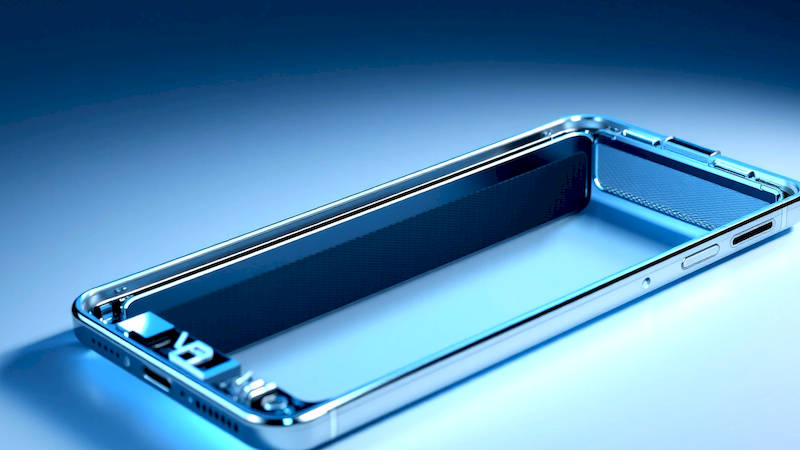
The relentless pursuit of faster processors, more demanding graphics, and increasingly power-hungry 5G connectivity has created a significant challenge for smartphone manufacturers: heat dissipation. As devices become more powerful and packed with components, the thermal load they generate increases proportionally. A smartphone overheating not only impacts performance through thermal throttling but also compromises battery life, user experience, and even component longevity. Historically, plastics and composites dominated smartphone construction for cost and weight considerations. However, the crucial need for efficient heat management is driving a renewed focus on metal materials – not merely as structural components, but as integral parts of sophisticated thermal designs. This article delves into the intricate world of designing smartphones with metal materials for superior heat dissipation, exploring the specific metals used, architectural approaches, and future trends.
The issue of smartphone heat dissipation isn't merely a technical hurdle; it’s a critical factor shaping user perception and brand reputation. A warm phone might be acceptable, but a hot phone triggers anxiety and a sense of poor quality. Manufacturers are constantly balancing performance gains with thermal control. Neglecting one for the other results in a sub-optimal user experience. Moreover, the trend toward thinner and lighter devices exacerbates the problem, offering less surface area for heat to escape. Therefore, innovative approaches utilizing enhanced thermal conductivity are essential, and metal materials are at the forefront of these solutions. Addressing thermal issues proactively translates directly into customer satisfaction and competitive advantage.
- The Role of Metals in Smartphone Thermal Management
- Aluminum Alloys: The Workhorse of Smartphone Thermals
- Copper: Stepping Up Thermal Performance
- Beyond Solid Metals: Vapor Chambers and Heat Pipes
- Thermal Interface Materials: The Critical Link
- Design Challenges and Future Trends
- Conclusion: A Multi-Faceted Approach to Smartphone Cooling
The Role of Metals in Smartphone Thermal Management
Metals, by their very nature, are far superior thermal conductors compared to plastics or composites. This fundamental property makes them indispensable in drawing heat away from critical components like the System-on-Chip (SoC), power management ICs (PMICs), and even the battery. The selection of specific metal isn’t merely about conductivity, but also factors like weight, cost, machinability, and corrosion resistance. Aluminum alloys are currently the most widely used, striking a balance between these factors but copper and increasingly, vapor chambers utilizing copper, are gaining prominence in flagship devices. Consider the example of the iPhone 12 Pro series, which incorporated a larger copper heat sink compared to previous generations, demonstrating the industry's acknowledgment of the importance of superior thermal performance.
The application of metals extends beyond simple heat sinks. Metal mid-frames act as chassis for distributing heat, while strategically placed metal plates can channel heat towards areas with greater surface area for dissipation. Furthermore, advancements in metal matrix composites (MMCs), where ceramic particles are embedded in a metal matrix, are offering materials with tailored thermal properties exceeding those of pure metals. However, the challenge lies in integrating these materials effectively within the increasingly complex and miniaturized smartphone architecture. The design principle relies on maximizing the contact area between heat-generating components and the metal, thereby facilitating efficient heat transfer.
Aluminum Alloys: The Workhorse of Smartphone Thermals
Aluminum alloys are the most prevalent metal used in smartphone thermal management due to their excellent combination of properties. They possess a relatively high thermal conductivity (around 205 W/mK for pure aluminum, though alloys vary), are lightweight, readily machinable, and possess adequate corrosion resistance. Different aluminum alloys are chosen based on specific requirements. Alloys like 6061 and 7075 offer high strength, ideal for structural components, while alloys with higher thermal conductivity are favored for heat spreaders. A common tactic is to utilize a combination of alloys, optimizing for both structural integrity and thermal performance within different parts of the device.
The application of aluminum typically involves creating a metal mid-frame that serves as the smartphone's structural backbone. This frame not only provides rigidity but also acts as a passive heat sink, drawing heat away from internal components. Additionally, aluminum heat spreaders are directly attached to the SoC using thermal paste or thermal interface materials (TIMs) to facilitate heat transfer. Companies like Samsung have been consistently improving their Vapor Chamber Cooling (VCC) technology and using aluminum frames as an integral part of their thermal solution. Proper surface treatment, like anodizing, is critical to enhance corrosion resistance and prepare the aluminum surface for optimal thermal interface material adhesion. The cost efficiency and ease of manufacturing make aluminum the dominant choice for mass-market smartphones.
Copper: Stepping Up Thermal Performance
While aluminum is widely utilized, copper, with its significantly higher thermal conductivity (around 401 W/mK), offers superior heat dissipation capabilities. However, copper is also denser and more expensive than aluminum, presenting design challenges. Consequently, copper isn't typically used for the entire chassis; rather, it's strategically employed in areas demanding the highest thermal performance. This often includes vapor chambers and direct contact heat spreaders for the SoC and other high-power components.
Vapor chambers, typically constructed with a copper core and an aluminum or copper cover, represent a particularly effective heat dissipation solution. They leverage the phase transition of a working fluid (usually water or ethanol) to transfer heat with exceptional efficiency. The liquid absorbs heat and vaporizes, transferring the heat to cooler areas where it condenses back into a liquid, repeating the cycle. This process allows for heat to be spread over a larger area, enabling more effective dissipation. Devices like the Asus ROG Phone series utilize sophisticated vapor chamber cooling systems to manage the considerable heat generated by their high-performance processors. Adding copper elements to the thermal architecture directly translates into improved thermal headroom allowing longer periods of peak processor performance.
Beyond Solid Metals: Vapor Chambers and Heat Pipes
Vapor chambers and heat pipes represent a significant advancement in smartphone thermal management, leveraging the principles of phase change heat transfer with exceptional efficiency. As previously mentioned, vapor chambers operate by utilizing a sealed chamber containing a working fluid. Heat pipes utilize a similar principle but employ a wick structure to facilitate the return of condensed fluid from the condensing end to the evaporation end. While both technologies are effective, vapor chambers generally offer higher performance due to their flat, two-dimensional shape, allowing for more efficient heat spreading.
Design integration of vapor chambers requires careful consideration of the thermal interface material (TIM) between the chamber and the heat source. Ensuring optimal contact and minimizing thermal resistance is crucial for maximizing performance. The shape and dimensions of the vapor chamber also must be carefully optimized for the specific smartphone design. Increasingly, manufacturers are exploring 3D vapor chambers to better conform to the complex internal geometry of smartphones, maximizing heat spreading capabilities. The usage of advanced working fluids improves thermal transfer and overall performance.
Thermal Interface Materials: The Critical Link
The effectiveness of any metal-based thermal solution heavily relies on the thermal interface material (TIM) used to bridge the gap between the heat-generating component and the metal heat sink or vapor chamber. TIMs fill in microscopic air gaps and imperfections, maximizing thermal contact and minimizing thermal resistance. Common TIMs include thermal paste (typically silicone-based compounds with metal oxide or metal particles), thermal pads (composite materials with embedded metallic fillers), and even liquid metal alloys.
Liquid metal TIMs, while offering exceptional thermal conductivity, present challenges related to galvanic corrosion and electrical conductivity. They require careful application and isolation to prevent damage to adjacent components. Thermal paste, while less conductive than liquid metal, offers a balance of performance, cost, and ease of application. Furthermore, the application method is crucial. Too little paste creates air gaps, reducing performance, while too much can create excessive resistance. Research is currently focusing on developing novel TIMs with enhanced performance and improved long-term reliability. Applying correctly, the TIM greatly enhances heat transfer and overall performance of the thermal solution.
Design Challenges and Future Trends
Despite the advantages of metal materials, designing for efficient heat dissipation in smartphones presents ongoing challenges. Tight space constraints, the desire for lighter and thinner devices, and the need for cost-effective manufacturing all contribute to the complexity. Another challenge is galvanic corrosion, especially when using dissimilar metals in close proximity. Preventing corrosion requires careful material selection and the use of protective coatings.
Looking ahead, several trends are shaping the future of smartphone thermal design. Advanced materials like graphene and carbon nanotubes are being explored for their exceptional thermal conductivity, although cost and manufacturing scalability remain hurdles. Microfluidic cooling – using tiny channels to circulate liquid coolants – is another promising, albeit complex, technology. Furthermore, software-based thermal management will play an increasingly important role, dynamically adjusting processor performance based on temperature sensors to prevent overheating and maintain optimal performance. Ultimately, the drive for more powerful and capable smartphones necessitates continuous innovation in thermal management, with metal materials remaining at the core of these advancements.
Conclusion: A Multi-Faceted Approach to Smartphone Cooling
Successfully managing heat dissipation in smartphones demands a holistic approach that integrates optimized metal materials, innovative thermal architectures, and advanced TIMs. Aluminum alloys currently dominate due to their balance of properties, but copper and vapor chambers are gaining traction in high-performance devices. Embracing the benefits of vapor chambers, skillfully applying appropriate TIMs, and employing smarter software thermal management are essential components of effective smartphone thermal design.
The key takeaways are clear: prioritize maximizing thermal contact, selecting materials strategically based on performance and cost, and continuously exploring new technologies like advanced composites and microfluidic cooling. For manufacturers, the next steps involve investing in research and development focused on these areas, collaborating with material scientists, and refining design processes to optimize for thermal performance without compromising other critical aspects like aesthetics and usability. Ultimately, a well-designed thermal management system isn’t merely a technical achievement; it’s a cornerstone of a superior user experience and a lasting competitive advantage in the ever-evolving smartphone market.
Deja una respuesta