
Building a Voice-Controlled Autonomous Robot Using Natural Language Processing
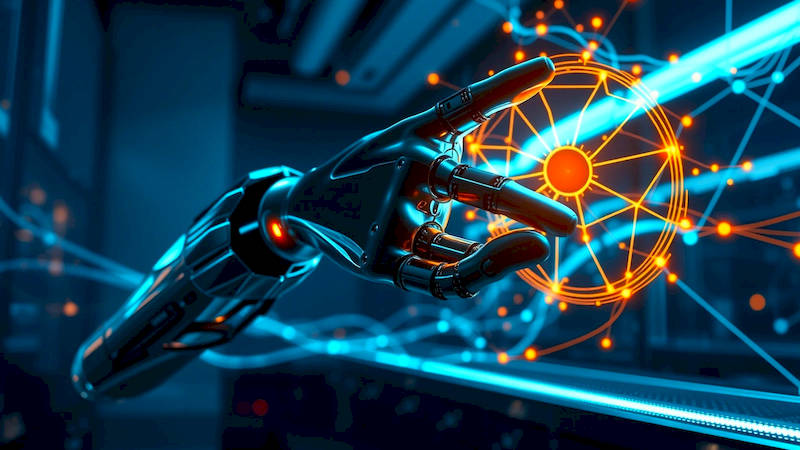
The intersection of robotics and artificial intelligence is rapidly transforming the way we interact with the physical world. From automated manufacturing and logistics to exploratory missions in hazardous environments, robots are becoming increasingly sophisticated and capable. A key element in making these robots truly useful and adaptable is the ability to understand and respond to natural human language. This pursuit leads us to the exciting field of voice-controlled autonomous robots, systems that can interpret spoken commands and execute tasks without explicit programming for every possible scenario. This advancement isn't just about convenience; it represents a paradigm shift towards more intuitive and collaborative human-robot interaction.
Traditional robotics often relies on pre-defined sequences of actions or complex gesture recognition. However, these methods are limited by their rigidity and the need for specialized knowledge to operate the robot. Incorporating Natural Language Processing (NLP) removes these barriers, allowing anyone to control a robot with the same language they use to communicate with each other. This technology isn't limited to simple ‘move forward’ or ‘turn left’ commands; modern NLP enables robots to understand nuanced requests, context-dependent instructions, and even implicit goals. The market reflects this potential – the service robotics market is projected to reach $79.2 billion by 2027, with significant growth driven by advancements in voice and gesture control (Source: Statista).
Building a voice-controlled autonomous robot is a multidisciplinary endeavor, requiring expertise in robotics, programming, and natural language processing. This article will delve into the core components, methodologies, and practical considerations for constructing such a system, providing a roadmap from initial design to functional implementation. We’ll cover the hardware requirements, the software stack including NLP libraries, and the challenges associated with creating a truly responsive and reliable robotic assistant.
Hardware Foundation: Choosing the Right Platform
The foundation of any robot is its hardware. Selecting the appropriate robot platform depends heavily on the intended application and the environmental constraints. For a voice-controlled system, mobility and sensory perception are critical. A differential drive robot, commonly using two wheels, is often a good starting point due to its simplicity and maneuverability. More complex platforms, such as those with articulated arms or legs, can be utilized for more specialized tasks but significantly increase the complexity of both hardware and software integration. Consider the robot's payload capacity—the weight it can carry—and its range of motion, aligning them with the expected tasks.
Beyond the base chassis, essential components include microcontrollers (like Arduino or Raspberry Pi), motor drivers, encoders for precise movement control, and a power source. The Raspberry Pi is particularly favored due to its processing power and ability to run Linux, which supports a wide range of software libraries including those for NLP. Integrating various sensors such as ultrasonic sensors for obstacle avoidance, cameras for visual perception, and inertial measurement units (IMUs) for orientation tracking will significantly enhance the robot's ability to navigate and understand its surroundings. The cost of a basic robotic platform with the necessary components can range from $200 to $800, depending on the features and quality of the components.
Finally, a crucial hardware component for voice control integration is a microphone. Selecting a noise-canceling microphone is essential, especially in dynamic environments. USB microphones, readily compatible with Raspberry Pi, offer a seamless integration option, providing good audio quality and ease of use. When selecting hardware, always consider the ease of integration with the chosen software stack and the availability of community support and documentation.
Implementing Natural Language Understanding (NLU)
The heart of the voice-controlled system is the Natural Language Understanding (NLU) component. NLU transforms spoken audio into structured data that the robot can interpret and act upon. This involves several key steps: Speech Recognition, Intent Recognition, and Entity Extraction. Speech recognition, converting audio to text, is typically handled by robust libraries like Google Speech Recognition, CMU Sphinx, or Vosk, all of which offer differing levels of accuracy and offline capabilities. Choosing the right speech recognition engine depends on factors such as internet connectivity, processing power, and the specific language being used.
Intent recognition identifies the user's purpose behind the spoken command. For example, the command "Go to the kitchen" signifies the intent ‘navigate_to_location’. Entity extraction isolates the key pieces of information within the command, such as the location 'kitchen' in the previous example. Several NLP frameworks simplify these processes. Rasa, for instance, is an open-source framework specifically designed for building conversational AI agents. Dialogflow (Google) and Microsoft LUIS are also popular options, providing cloud-based NLP services with easy-to-use interfaces.
Successfully training an NLU model requires a substantial dataset of example utterances mapped to their corresponding intents and entities. Data augmentation techniques – generating variations of existing utterances – can help improve the model's robustness and accuracy. For example, "Move forward," "Please move ahead," and "Go straight" should all be mapped to the same intent.
Bridging the Gap: Connecting NLU to Robotic Actions
Once the NLU component has extracted the intent and entities from the spoken command, the next challenge lies in translating these abstract concepts into concrete robotic actions. This is where a central control system or “behavior arbiter” comes into play. This system receives the structured data from the NLU model and maps it to corresponding functions or routines that control the robot’s hardware. A critical consideration is modular design. Creating independent modules for specific actions, such as ‘move_to_location’, ‘pick_up_object’, or ‘report_status’, promotes reusability and simplifies debugging.
Implementing this connection often involves using a programming language like Python, which provides excellent libraries for robotics (like ROS - Robot Operating System) and easy integration with NLP frameworks. ROS offers a robust framework for building complex robotic systems, providing tools for communication, sensor processing, and motion planning. The behavior arbiter can utilize a rule-based system, mapping intents and entities to specific actions based on predefined rules. More sophisticated approaches use state machines or behavior trees to manage complex sequences of actions and handle unexpected scenarios. For instance, if the robot is instructed to “Go to the kitchen, but avoid the table”, the behavior arbiter needs to coordinate the navigation system to reach the kitchen while simultaneously incorporating obstacle avoidance.
Obstacle Avoidance and Autonomous Navigation
A truly autonomous robot cannot simply follow instructions blindly. It must perceive its environment and navigate safely, avoiding obstacles and adapting to changes. This requires integrating sensor data (from ultrasonic sensors, cameras, or LiDAR) with a navigation algorithm. Several algorithms are commonly used, including potential field methods, where the robot is attracted to its goal while repelled by obstacles, and SLAM (Simultaneous Localization and Mapping), which allows the robot to build a map of its surroundings and simultaneously determine its own location within that map.
Implementing robust obstacle avoidance requires careful calibration of the sensors and tuning of the algorithm parameters. "Reactive" obstacle avoidance, where the robot responds immediately to detected obstacles, is essential for avoiding collisions in dynamic environments. However, relying solely on reactive avoidance can result in inefficient paths, particularly in cluttered spaces. Therefore, integrating path planning algorithms (like A* or Dijkstra’s) to generate optimal trajectories can significantly improve the robot’s performance. A key challenge is handling the uncertainty inherent in sensor data. Sensor fusion – combining data from multiple sensors – can mitigate these uncertainties and provide a more accurate representation of the environment.
Testing, Refinement and Addressing Edge Cases
Once the basic system is assembled, rigorous testing is crucial. Start with simple commands and gradually increase the complexity. Pay close attention to edge cases – scenarios that the system was not specifically trained for. These might include ambiguous commands, noisy environments, or unexpected obstacles. For example, if the robot is asked to “Pick up the red block,” but there are multiple red blocks, the system needs to ask for clarification.
Log all commands and the robot’s response, analyzing the data to identify areas for improvement. The NLU model may require retraining with additional data to handle previously unrecognized phrases or intents. The robotic behaviors may need adjustments to improve accuracy and efficiency. User feedback is invaluable during this stage. Observing how real users interact with the robot can highlight usability issues and areas where the system falls short of expectations. Iterative refinement, incorporating both quantitative data analysis and qualitative user feedback, is essential for creating a truly robust and user-friendly voice-controlled robot.
Conclusion: The Future of Human-Robot Collaboration
Building a voice-controlled autonomous robot using natural language processing is a complex but rewarding endeavor. It represents a significant step towards creating robots that can seamlessly integrate into our lives and assist us in a wide range of tasks. From the careful selection of hardware components to the nuanced development of the NLU and control systems, each step requires careful consideration and a multidisciplinary approach. The technologies discussed—ROS, Rasa, Python, and various sensor technologies – are constantly evolving, offering greater capabilities and reducing the barriers to entry.
Key takeaways include the importance of modular design, the necessity of robust data training for NLU models, and the critical role of sensor fusion for reliable navigation. As NLP and robotics continue to advance, we can expect to see voice-controlled robots becoming increasingly prevalent in diverse applications, transforming industries and enhancing our daily lives. The real power of these robots lies not just in their ability to perform tasks, but in their ability to understand and respond to us in a natural and intuitive way, fostering a truly collaborative future. The next steps for aspiring creators include exploring advanced techniques like reinforcement learning for improved robot control, and investigating the integration of vision-based NLP for even richer contextual understanding.
Deja una respuesta