
Exploring Solar-Powered Phone Cases: Are They Worth It?
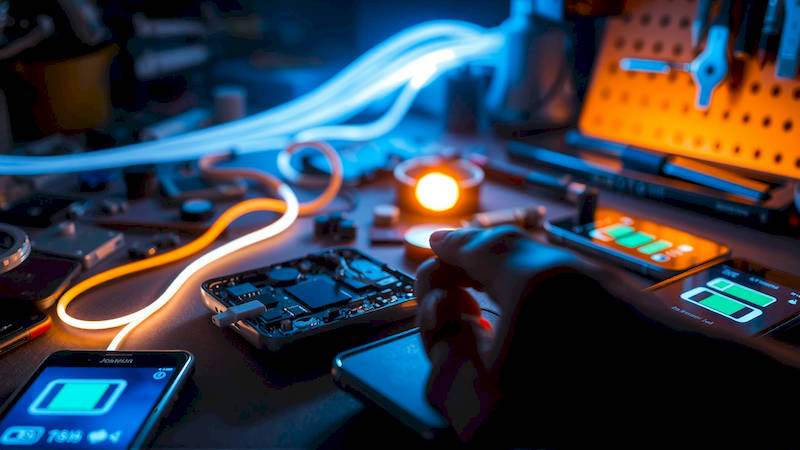
The relentless drain on smartphone batteries is a modern affliction. We’ve become utterly reliant on these devices, yet their power seems to vanish at the most inconvenient times. This constant need for a power source has fueled a search for alternative charging solutions, and among the most intriguing is the solar-powered phone case. Promising a free, renewable energy boost, these cases have gained traction in recent years. But do they truly deliver on their promise? This article dives deep into the world of solar-powered phone cases; examining the technology, assessing their actual performance, exploring the trade-offs, and ultimately determining whether they’re a worthwhile investment for the average smartphone user. We'll move beyond marketing hype and delve into the practical realities of harnessing the sun to keep our devices alive.
The appeal of solar charging for smartphones is obvious. Imagine being able to top up your battery simply by leaving your phone in the sun – a potentially game-changing solution for outdoor enthusiasts, travelers, or anyone concerned about reducing their reliance on traditional power outlets. However, the reality is often more complex. Several factors influence the effectiveness of these cases, from the efficiency of the solar panels themselves to the intensity of the sunlight available and even the phone’s power consumption. Understanding these nuances is crucial for making an informed decision. This article seeks to offer a thorough examination, moving beyond surface-level assessments.
- The Technology Behind Solar Phone Cases: How Do They Work?
- Assessing Real-World Performance: Charging Speeds and Limitations
- The Trade-offs: Bulk, Weight, and Cost Considerations
- The Impact of Phone Usage & Solar Panel Efficiency
- Beyond Cases: Alternative Solar Charging Solutions
- Are Solar Powered Phone Cases Worth the Investment? A Final Verdict
The Technology Behind Solar Phone Cases: How Do They Work?
Solar-powered phone cases aren’t simply slapping a solar panel onto a battery pack and hoping for the best. The underlying technology is surprisingly sophisticated, though variations exist between different models. Most commonly, these cases use monocrystalline or polycrystalline silicon solar panels, precisely sized to fit the contours of the phone. Monocrystalline panels are generally more efficient – converting a higher percentage of sunlight into electricity – but they're also more expensive to produce, driving up the case's price. Polycrystalline panels offer a more budget-friendly option, although with slightly reduced performance. These panels capture photons from sunlight, initiating an electronic process that generates a direct current (DC) electricity.
This generated DC power isn’t directly usable by your smartphone, which requires a consistent 5V DC input, typically delivered via USB. Therefore, a crucial component is a charge controller. This vital circuit regulates the voltage and current from the solar panel, preventing overcharging and protecting your phone’s battery. The charge controller then converts the power to a format compatible with the phone's charging port. More advanced cases include a small internal battery, storing excess solar energy for later use, effectively acting as a small power bank. The capacity of this internal battery varies significantly.
Furthermore, the efficiency of the energy transfer is not 100%. Heat loss, resistance in the circuitry, and the limitations of the charge controller all contribute to some energy dissipation. Ultimately, the amount of power a solar case generates depends on several variables, including the panel’s surface area, its efficiency rating (typically between 15% and 22% for commercially available cases), and the intensity of the light it receives. A particularly important specification to look for is the wattage output of the panel – the higher the wattage, the faster the potential charging speed.
Assessing Real-World Performance: Charging Speeds and Limitations
Numerous reviews and tests have indicated that the charging speeds delivered by solar-powered phone cases rarely match the output of a standard wall charger. This isn’t necessarily a flaw, but a reflection of the inherent limitations of solar technology in a compact form factor. Most cases provide a trickle charge, adding only a small percentage of battery life per hour of direct sunlight. Contemporary smartphones with large battery capacities (often exceeding 4000 mAh) require substantially more power to achieve a meaningful charge. Even the best-performing cases might only contribute a few percentage points per hour under optimal conditions.
A significant factor impacting performance is the angle of the sun. Solar panels work most efficiently when sunlight hits them perpendicularly. Holding a phone at a natural angle or placing it on a surface that isn’t perfectly aligned will reduce the amount of sunlight captured, lessening the charging speed. Cloud cover, shade, and even the time of day also play a role. On a cloudy day, the charging rate can drop dramatically, rendering the case virtually useless for immediate power needs. Lab tests conducted by tech publications show that many solar cases only provide around 5W of power which doesn't even come close to the 15W+ offered by fast charging wall adapters.
Recent case studies involving long-distance hikers demonstrated that while solar cases can contribute to extending battery life during multi-day trips, they shouldn’t be relied upon as the sole source of power. Hikers still needed portable power banks to ensure reliable charging, using the solar case as a supplemental option to recharge the power bank when conditions allowed. It’s also important to remember that heavily used phones – those running GPS, streaming music, or taking photos frequently – might consume energy faster than the solar case can generate it, resulting in a net loss of battery.
The Trade-offs: Bulk, Weight, and Cost Considerations
Beyond charging performance, solar-powered phone cases introduce several trade-offs that potential buyers must consider. One of the most noticeable is the increase in bulk and weight. Even relatively slim models add significantly to the phone’s size and heft. The inclusion of solar panels and an internal battery (if present) naturally adds volume. This can make the phone less comfortable to hold and carry. The weight increase, while not dramatic, can be noticeable over extended periods.
The cost is another significant factor. Solar phone cases are typically more expensive than conventional protective cases. Prices range from around $30 to upwards of $100 or more, depending on the panel efficiency, battery capacity, and brand reputation. While the long-term benefit of free solar energy is appealing, the initial investment is considerably higher. It’s essential to evaluate whether the potential energy savings justify the added expense.
Durability can also be a concern. Some solar cases utilize relatively fragile materials in their construction. Frequent drops or impacts could damage the solar panels or the internal circuitry, rendering the case useless. The protective qualities are frequently compromised as well, prioritizing solar capture over ruggedness. Consumers should therefore look for cases that strike a balance between protection, solar charging capability, and overall build quality.
The Impact of Phone Usage & Solar Panel Efficiency
The energy demands of modern smartphones are constantly increasing, fueled by more powerful processors, larger displays, and data-intensive applications. The power consumption varies significantly based on usage patterns. For example, streaming high-definition video consumes considerably more energy than simply browsing text-based websites. Gaming is another major battery drain. When assessing the viability of a solar-powered case, it's crucial to consider how the phone will primarily be used. If the phone is primarily used for light tasks with minimal screen-on time, a solar case might provide a more noticeable benefit.
Solar panel efficiency is a critical determinant of performance. As mentioned earlier, monocrystalline panels are generally more efficient than polycrystalline panels, but their higher cost reflects this advantage. However, even the most efficient panels have inherent limitations. The theoretical maximum efficiency for silicon solar cells is around 29%, and commercially available panels typically fall short of this. Furthermore, efficiency degrades over time, as the solar panels are exposed to ultraviolet radiation and temperature fluctuations. A reduction in efficiency means less power generation, diminishing the case’s charging capability.
Beyond Cases: Alternative Solar Charging Solutions
While solar-powered phone cases are a popular option, they’re not the only way to harness solar energy to charge your smartphone. Portable solar chargers – essentially foldable solar panels with USB outputs – offer a more flexible and powerful solution. These chargers typically have a larger surface area of solar panels, resulting in faster charging speeds. They’re also less bulky than cases, making them easier to pack and carry.
Another option is a solar power bank – a combination of a portable battery and a solar panel. These devices allow you to pre-charge the battery via solar energy and then use the stored power to charge your phone. They offer a convenient way to have a reserve of power available, even when sunlight is unavailable. Dedicated solar backpacks, equipped with integrated solar panels, are also available for outdoor enthusiasts who need to charge their devices on the go. Although generally more expensive, these options represent powerful and reliable choices.
Are Solar Powered Phone Cases Worth the Investment? A Final Verdict
Ultimately, the question of whether a solar-powered phone case is “worth it” is highly subjective. For the average smartphone user who primarily charges their phone indoors or has access to traditional power outlets, the benefits are likely marginal. The added bulk, weight, and cost might not be justified by the limited charging gains. However, for specific user groups – outdoor enthusiasts, travelers, or individuals living in areas with unreliable electricity access, a solar-powered case, or other solar charging solutions, can be a valuable addition to their gear.
The key is to have realistic expectations. A solar case is not a replacement for a wall charger or a power bank; it’s a supplementary charging option. It can help extend battery life in a pinch, but it’s unlikely to fully charge your phone quickly or reliably. Proper usage – maximizing sun exposure, minimizing phone usage during charging – is essential to maximizing its effectiveness. For those who are committed to sustainable energy and prepared to accept the trade-offs, a well-chosen solar-powered case can be a worthwhile investment, offering a small but meaningful step toward a more eco-friendly lifestyle.
Deja una respuesta