Role of AI co-processors in enhancing smartphone camera and system performance
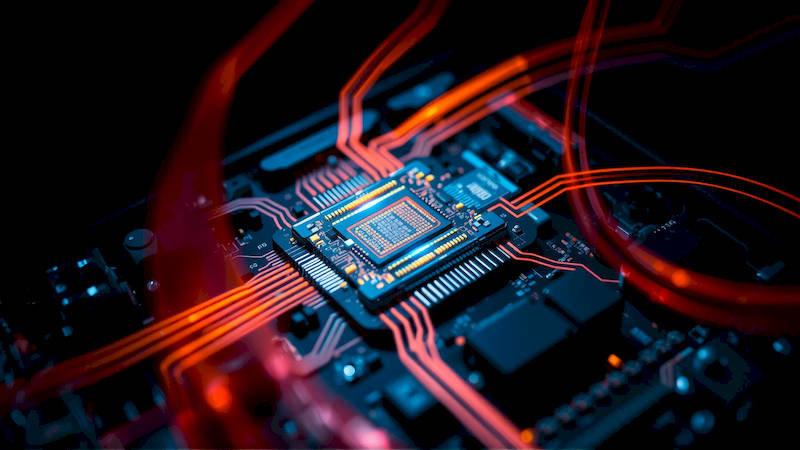
The modern smartphone is arguably the most powerful computing device most people own. Beyond communication and connectivity, it’s a pocket-sized camera, gaming console, and personal assistant. This evolution is no longer driven solely by faster CPUs and GPUs; a new player has entered the arena: the AI co-processor, often referred to as a Neural Processing Unit (NPU) or Neural Engine. These dedicated processors are fundamentally changing how smartphones operate, particularly in the areas of camera functionality and overall system performance. From dramatically improving low-light photography to enabling real-time language translation and enhancing battery efficiency, AI co-processors are the invisible force behind many of the most compelling features we now take for granted. This article will delve into the role of these crucial components, exploring their architecture, functionalities, and future potential.
The integration of AI into smartphones wasn't an overnight revolution. Early attempts at on-device machine learning relied heavily on the CPU and GPU, which were not optimized for the specific demands of neural networks. This resulted in slow processing times, high power consumption, and limited capabilities. The advent of dedicated AI co-processors marked a turning point, allowing manufacturers to offload computationally intensive AI tasks from the main processor. This not only freed up the CPU and GPU for other tasks but also significantly improved the efficiency and speed of AI-powered features. The shift represents a move toward "intelligent" smartphones capable of adapting and learning from user behavior, offering increasingly personalized and seamless experiences.
The Architecture and Functionality of AI Co-Processors
AI co-processors aren’t simply “faster CPUs.” They operate on a fundamentally different principle, designed specifically for the matrix multiplications and parallel processing that are the core of most machine learning algorithms. Unlike CPUs, which excel at a broad range of tasks, NPUs are highly specialized – akin to a dedicated graphics card, but for AI instead of visuals. They consist of numerous, smaller processing cores optimized for these mathematical operations, enabling them to execute AI tasks with far greater efficiency and speed. The architecture varies between manufacturers – Apple’s Neural Engine, Google’s Tensor Processing Unit (TPU), and Huawei’s Kirin NPU all have distinct designs – but the underlying principle remains the same.
These processors don't operate in isolation either. They work in concert with the CPU, GPU, and image signal processor (ISP), creating a complex ecosystem of processing power. For example, when you take a photo, the ISP initially handles the raw image data. Then, the AI co-processor takes over, identifying objects, adjusting settings, and applying enhancements based on the scene it recognizes. The final image you see is the result of this collaborative effort. This offloading of AI tasks is vital—attempting to perform these calculations solely on the CPU would lead to significant delays and battery drain.
Furthermore, the power of these co-processors is continually increasing with each new generation. Early NPUs provided modest improvements, primarily focused on image processing. However, newer iterations are capable of handling much more complex tasks, including natural language processing, augmented reality, and even advanced security features like facial recognition. This expanding capability is driving innovation across the smartphone landscape.
AI Co-Processors and the Transformation of Smartphone Photography
Perhaps the most visible impact of AI co-processors is in the realm of smartphone photography. Features like Night mode, portrait mode, and scene recognition are all powered by on-device AI. Night mode, for instance, utilizes sophisticated algorithms to combine multiple frames and reduce noise in low-light conditions. This process was previously impractical due to the computational demands, but became feasible with dedicated AI hardware. Similarly, portrait mode relies on AI to accurately identify the subject and create a realistic bokeh effect – blurring the background while keeping the subject sharp.
Beyond these common features, AI co-processors are enabling entirely new photographic capabilities. Computational photography techniques like HDR+ (used extensively in Google Pixel phones) leverage AI to capture a wider dynamic range and produce more balanced images. Google’s Super Res Zoom utilizes AI to enhance image detail at higher zoom levels without significant loss of quality, effectively bridging the gap between optical and digital zoom. According to a study conducted by DxOMark, smartphones with powerful AI co-processors consistently achieve higher scores in image quality tests, specifically in areas like noise reduction, dynamic range, and detail preservation. This demonstrates the direct correlation between AI processing power and photographic performance.
This isn’t just beneficial for still images; AI co-processors are also improving video recording. Features like real-time stabilization and object tracking are becoming increasingly common, providing smoother and more professional-looking videos. The ability to identify and enhance faces in videos is another example of the power of on-device AI.
Enhancing System Performance & Battery Efficiency
The benefits of AI co-processors extend far beyond the camera. By offloading computationally intensive tasks from the CPU and GPU, they significantly improve overall system performance. This results in faster app launch times, smoother multitasking, and a more responsive user experience. For example, tasks like voice recognition and language translation can now be performed in real-time without significantly impacting battery life.
AI co-processors are also playing a crucial role in optimizing battery efficiency. By learning user behavior and predicting app usage patterns, they can proactively allocate resources and minimize power consumption. Features like adaptive brightness and background app management are powered by AI algorithms that intelligently adjust device settings based on individual needs. This isn’t just about minor tweaks; significant power savings can be achieved by intelligently managing hardware resources.
Furthermore, AI is being used to improve power management at a deeper level. Processors can dynamically adjust clock speeds and voltage levels based on the workload, optimizing performance while minimizing energy waste. This type of granular control was previously unattainable without dedicated AI hardware. A report by ARM, a leading chip designer, suggests that AI-powered power management techniques can extend battery life by up to 20%.
The Evolution of On-Device AI: Privacy and Security Considerations
As AI becomes increasingly integrated into our smartphones, the importance of on-device processing becomes paramount. Processing data locally, rather than sending it to the cloud, offers significant privacy and security advantages. Sensitive information like photos, voice recordings, and personal data remain on the device, reducing the risk of data breaches and unauthorized access.
This is particularly relevant in scenarios like facial recognition. Performing facial matching on-device ensures that your biometric data is not transmitted to a remote server. Similarly, real-time translation can be performed offline, safeguarding the privacy of your conversations. Moreover, on-device AI allows smartphones to function even without an internet connection, providing essential functionality in areas with limited or no connectivity.
However, maintaining on-device AI also presents challenges. Keeping the AI models up-to-date requires efficient update mechanisms that minimize data usage and battery drain. Manufacturers must also prioritize security to protect against malicious attacks that could compromise the integrity of the AI models. The balance between functionality, privacy, and security is a crucial consideration in the continued development of on-device AI.
The Future of AI Co-Processors in Smartphones
The development of AI co-processors is far from over. We can expect to see even more powerful and versatile NPUs in future smartphones. Architectural improvements will focus on increasing processing speed, reducing power consumption, and enhancing the ability to handle complex AI tasks. Quantum computing, while still in its early stages, holds the potential to revolutionize AI processing in the long term.
Beyond performance gains, we'll likely see AI being used in new and innovative ways across the smartphone ecosystem. For example, AI could be used to predict and prevent app crashes, optimize network connections, and personalize user interfaces in real-time. Furthermore, the integration of AI with emerging technologies like augmented reality (AR) and virtual reality (VR) will unlock new possibilities for immersive experiences. Experts predict that within the next five years, AI co-processors will become an integral part of every aspect of the smartphone experience, seamlessly enhancing our daily lives.
The competition between smartphone manufacturers to develop and integrate leading-edge AI technology will only accelerate. Apple, Google, Samsung, and Huawei are all investing heavily in this space, driving innovation and pushing the boundaries of what's possible. The consumer is ultimately the beneficiary of this competition, gaining access to smarter, more powerful, and more personalized smartphones.
In conclusion, AI co-processors represent a pivotal shift in smartphone technology. What began as a solution to improve camera performance has evolved into a fundamental component that enhances nearly every aspect of the smartphone experience. From significantly improved image quality and extended battery life to enhanced system performance and greater privacy, the benefits are undeniable. Looking ahead, the future of smartphones is inextricably linked to the continued development and refinement of these intelligent processors, promising a world of increasingly personalized, intuitive and powerful mobile computing. The key takeaway is that the true potential of your smartphone is increasingly unlocked not by raw processing power alone, but by its ability to learn, adapt, and intelligently respond to your needs – all thanks to the rise of the neural engine.
Deja una respuesta