
Comparing USB-C and Lightning Cables: Which Fits Your Smartphone Needs?
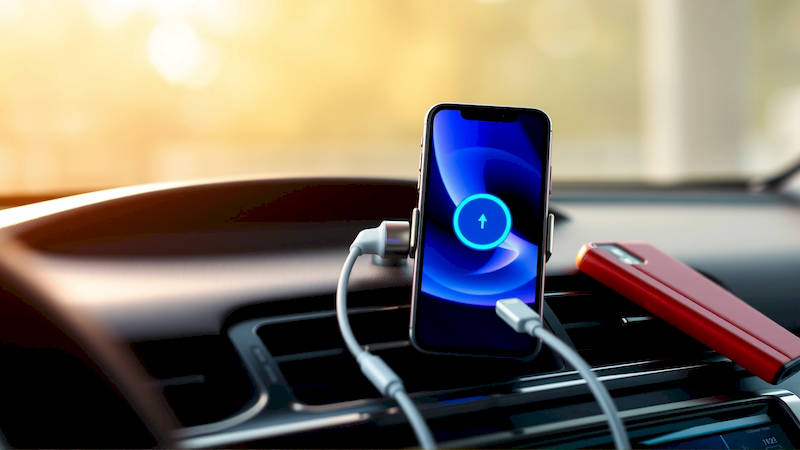
The world of smartphone connectivity has long been dominated by two primary standards: USB-C and Lightning. For years, Apple steadfastly adhered to the Lightning connector while the vast majority of the Android world, and increasingly other devices, moved towards the universal appeal of USB-C. This divergence has led to confusion for consumers, requiring multiple cables for different devices and creating a fragmented ecosystem. Now, with increasing regulatory pressure and technological advancements, the landscape is beginning to shift. This article provides a comprehensive comparison of USB-C and Lightning, exploring their technical capabilities, compatibility, speed, safety features, and future outlook to help you determine which connector best fits your smartphone needs.
Initially, the difference was largely a matter of manufacturer preference. Apple’s Lightning was proprietary, offering a secure connection and relatively compact design. USB-C, on the other hand, has always been an industry-standard championed for its versatility. However, the debate extends far beyond brand loyalty – it touches upon data transfer speeds, power delivery capabilities, and the overall convenience of a unified charging standard. As the push for standardization gains momentum, understanding the nuances of each technology becomes increasingly crucial for informed purchasing decisions and optimal device usage.
Ultimately, deciding which connector reigns supreme isn’t simply about which one is ‘better’; it’s about understanding the current ecosystem and anticipating the direction technology is heading. This article will break down the complex details, providing a clear, detailed analysis to guide you through the evolving world of smartphone connectivity. Let’s explore the specifics.
- The Technical Foundations: A Detailed Look at Each Connector
- Speed and Data Transfer: How Fast Can They Move Your Files?
- Power Delivery: Charging Your Devices Efficiently
- Durability and Reliability: Which Connector Holds Up Better?
- The Future Outlook: Standardization and the Regulatory Landscape
- Compatibility and the Adapter Ecosystem
- Conclusion: Embracing the Universal Standard
The Technical Foundations: A Detailed Look at Each Connector
Lightning, introduced by Apple in 2012, is an 8-pin connector designed for portability and compactness. Its construction prioritizes a robust connection, crucial for Apple’s emphasis on smooth user experience. Critically, Lightning is a wholly proprietary connector. While it builds upon USB standards in some respects, it’s not fully compliant with any particular USB version – rendering it incompatible with standard USB ports without an adapter. This means reliance on Apple-certified cables and accessories for optimal performance, and often limiting cross-compatibility with non-Apple devices. The connector itself is reversible, addressing a common frustration with older USB standards, but it remains a closed ecosystem.
USB-C, conversely, is an industry standard defined by the USB Implementers Forum (USB-IF). It’s a 24-pin connector capable of supporting multiple protocols, including USB data transfer, power delivery (USB-PD), DisplayPort video output, and even Thunderbolt data transfer. This versatility is a core strength of USB-C; a single port can handle a wide array of functions. Furthermore, USB-C's design allows for faster charging speeds and data transfers, and its widespread adoption means it’s found on a massive range of devices, from smartphones and laptops to e-readers and webcams. The USB-IF continues to evolve the USB-C standard, with the latest USB4 and USB 3.2 generations offering blistering speeds.
The key difference lies in open versus closed ecosystems. Lightning offers strong control and optimization within the Apple world, but at the cost of broader compatibility. USB-C delivers flexibility and universality, embracing a broader suite of device types and connection capabilities, at the expense of some potential for vendor-specific optimizations.
Speed and Data Transfer: How Fast Can They Move Your Files?
Data transfer speeds are a significant area where USB-C has historically outperformed Lightning. Early iterations of Lightning were limited to USB 2.0 speeds (around 480 Mbps), sufficient for basic syncing and file transfers, but inadequate for large files in modern use cases. While Apple later introduced Lightning 3, supporting USB 3.0 speeds (up to 5 Gbps), this faster version wasn’t universally implemented across all Apple devices or accessories. This inconsistency was a frequent source of frustration for users transferring large video files or backing up their iPhones.
USB-C, leveraging standards like USB 3.1, USB 3.2, and USB4, consistently delivers significantly faster data transfer rates. USB 3.1 Gen 1 achieves speeds up to 5 Gbps, while USB 3.1 Gen 2 doubles that to 10 Gbps. USB 3.2 and USB4 push those limits even further, achieving up to 40 Gbps with the right cables and devices. These speeds are crucial for users who frequently work with large files, such as 4K or 8K video footage. “We’re seeing a clear trend towards faster data transfer as media sizes grow exponentially," notes tech analyst Ben Thompson. "USB-C is simply better equipped to handle that demand.”
The gap in speed is becoming increasingly important as smartphone cameras capture higher-resolution images and videos. Transferring these files to a computer or external storage device takes considerably less time with USB-C compared to older or slower Lightning implementations.
Power Delivery: Charging Your Devices Efficiently
Power Delivery (PD) is vital for fast charging, and here again USB-C generally holds an advantage. While Apple’s Lightning can deliver up to around 2.5W with standard charging, primarily for older iPhones, newer USB-C PD chargers allow for significantly faster charging speeds. USB-C PD can deliver up to 240W, allowing for rapid charging of even power-hungry devices like laptops. Apple adapted and implemented USB-C PD in their newer iPhones and iPads.
USB-C PD uses a negotiation process between the charger and the device to determine the optimal voltage and current levels for safe and efficient charging. This allows devices to "request" the power they need, preventing overheating and extending battery life. Lightning’s power delivery capabilities were initially more limited, requiring proprietary chargers for faster charging. While Apple eventually adopted a form of fast charging for Lightning-equipped devices, it remained less standardized and often less efficient than USB-C PD.
"The adoption of USB-C PD has been a game-changer for charging convenience,” says electronics engineer Emily Carter. “Being able to use a single charger for your smartphone, laptop, and other devices simplifies travel and reduces electronic waste.” This interoperability is a key benefit of the USB-C standard.
Durability and Reliability: Which Connector Holds Up Better?
Both Lightning and USB-C connectors are designed to withstand a reasonable amount of wear and tear, but differences in design and manufacturing influence their long-term durability. Lightning connectors, while relatively small and space efficient, can be prone to lint build-up within the port, preventing a solid connection. This is a common issue reported by iPhone users and often requires cleaning with a compressed air canister or a specialized tool. The 8-pin design also means that if one pin is damaged, the entire port may become unusable.
USB-C connectors are generally considered more durable due to their more robust construction and wider pin spacing. This makes them less susceptible to lint accumulation and damage from repeated insertion and removal. The more substantial connector helps it withstand physical stress better than the smaller Lightning port. However, less expensive USB-C cables or ports may utilize lower-quality materials susceptible to wear or bending.
From a cable perspective, USB-C cables have shown a greater range in quality. The open standard allows more manufacturers to produce USB-C cables, which in turn means quality control can vary significantly. Investing in high-quality, certified USB-C cables is crucial to ensure reliable performance and longevity.
The Future Outlook: Standardization and the Regulatory Landscape
The future of smartphone connectivity is leaning definitively towards USB-C. The European Union has mandated that all new smartphones and small electronic devices sold within the EU must use USB-C charging ports by late 2024. This landmark legislation aims to reduce electronic waste and simplify charging for consumers. While Apple initially resisted this decision, they have now begun transitioning their devices, most noticeably with the introduction of USB-C on the iPhone 15 series.
This regulatory shift has ripple effects globally. Even outside the EU, manufacturers are increasingly adopting USB-C to streamline production and cater to a wider market. The move towards USB-C is not simply a matter of compliance; it's a recognition of the benefits in terms of speed, efficiency, and convenience.
The ongoing development of USB technology, with improvements to USB4 and future iterations promising even faster speeds and greater power delivery, will further solidify USB-C as the dominant standard. It’s likely that Lightning will become relegated to legacy compatibility, existing primarily through adapters and older devices.
Compatibility and the Adapter Ecosystem
The transition to USB-C hasn't been seamless, particularly for Apple users with older devices. The incompatibility between Lightning and USB-C has fostered a substantial market for adapters. These adapters allow you to connect Lightning devices to USB-C ports and vice versa. However, it’s important to note that adapters can sometimes introduce limitations, such as reduced charging speeds or data transfer rates.
Choosing the right adapter is crucial. Opt for reputable brands that adhere to USB-IF standards to ensure safety and performance. Avoid cheap, uncertified adapters, as they may damage your devices. Always read reviews and error reports on various adapters before selecting one.
The need for adapters highlights the convenience of a unified standard. As USB-C becomes more prevalent, the reliance on adapters will diminish, simplifying the charging and connectivity experience for all users.
Conclusion: Embracing the Universal Standard
The comparison between USB-C and Lightning reveals a clear trend: USB-C is the more versatile, faster, and future-proof connector. While Lightning served Apple well for many years, its proprietary nature and slower speeds have become increasingly limiting in a world demanding faster data transfer and more efficient charging. The impending regulatory requirements and Apple’s own adoption of USB-C on their flagship devices signal the beginning of the end for Lightning as a primary connection standard.
For consumers, this shift offers several benefits. Reduced e-waste, simplified charging, faster data transfer, and increased compatibility are all compelling reasons to embrace USB-C. Investing in high-quality USB-C cables and chargers will ensure you're prepared for the future of smartphone connectivity. Although adapters will remain useful for a period, the ultimate goal is a streamlined ecosystem where a single cable can power and connect all your devices. The future is USB-C, and it’s a future that promises greater convenience and innovation for everyone.
Deja una respuesta