
How to Use Mixed Reality Headsets for Remote Collaboration in 2026
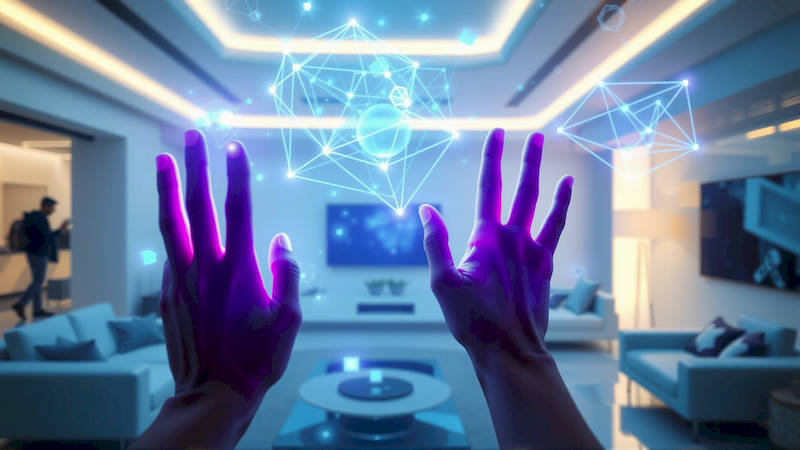
The way we work is undergoing a radical transformation. The pandemic accelerated the shift to remote and hybrid models, but the limitations of current video conferencing technologies are becoming increasingly apparent. We’re craving more immersive, engaging, and productive ways to connect with colleagues regardless of location. Enter mixed reality (MR) – a technology poised to revolutionize remote collaboration by seamlessly blending the physical and digital worlds. By 2026, advancements in headset capabilities, 5G connectivity, and software sophistication will make MR a mainstream tool for businesses of all sizes, moving beyond novelty and becoming integral to daily operations.
This isn’t merely about improved video calls. MR allows for shared holographic experiences, virtual workspaces, and real-time 3D interaction with data and designs. Imagine architects collaboratively reviewing a building’s blueprint as a life-sized hologram in their respective living rooms, or a surgeon guiding a colleague through a complex procedure from thousands of miles away. This article will explore the facets of utilizing mixed reality headsets for remote collaboration, the technologies enabling this shift, practical applications, and the challenges businesses should anticipate.
- Understanding the Mixed Reality Landscape in 2026
- Core Applications: Transforming Remote Workflows
- Setting Up a Collaborative MR Environment: Hardware and Software
- Overcoming the Challenges: Adoption and Usability
- The Role of AI and Digital Twins in MR Collaboration
- Looking Ahead: The Future of Remote Work is Mixed
Understanding the Mixed Reality Landscape in 2026
By 2026, the MR headset market will be significantly more mature than it is today. Early generations of headsets, like the Microsoft HoloLens 2 and Magic Leap 1, paved the way, but the devices available in 2026 will benefit from several key advancements. Expect lighter, more comfortable headsets with significantly improved displays – achieving resolutions rivaling that of high-end smartphones. Crucially, field of view will be broader, reducing the "binocular" effect of earlier devices, and better eye-tracking and hand-tracking technology will enable more natural and intuitive interactions. Furthermore, the integration of AI will drive contextual awareness, allowing headsets to understand and respond to the user’s environment in a more intelligent way.
The ecosystem will also be far more robust. We'll see a proliferation of software designed specifically for collaborative MR experiences, going beyond simple screen sharing. Platforms will offer persistent virtual workspaces, enabling teams to leave projects “open” and return to them later, regardless of location. Furthermore, interoperability between different MR platforms will be a key focus, allowing teams using various devices to collaborate effectively. Apple’s anticipated entry into the MR space is expected to be a significant catalyst for wider adoption, bringing a focus on design and user experience that hasn’t been prominent in the enterprise market thus far.
A critical enabler will be the broader availability of reliable, low-latency 5G and even 6G networks. MR applications demand substantial bandwidth and processing power, often exceeding the capabilities of standard Wi-Fi. Widespread 5G infrastructure will ensure a seamless and responsive experience, crucial for real-time collaboration. "Edge computing," processing data closer to the user, will further reduce latency and improve performance, especially for bandwidth-intensive tasks like rendering complex 3D models.
Core Applications: Transforming Remote Workflows
The applications of MR in remote collaboration are incredibly diverse, spanning numerous industries. In engineering and design, MR allows teams to visualize and manipulate complex 3D models in a shared, immersive environment. Instead of relying on 2D screens, engineers can walk around and inspect a virtual prototype, identify potential flaws, and make design changes in real-time, all while collaborating with colleagues across the globe. A automotive design team, for example, could simulate a crash test in MR, analyzing stress points and making adjustments before a physical prototype is even built – leading to substantial cost savings and faster development cycles.
Beyond design, MR is poised to revolutionize training and education. Imagine a medical student practicing a surgical procedure on a holographic patient, receiving real-time feedback from an experienced surgeon remotely. Or a field technician being remotely guided through a complex repair by an expert, with instructions and diagrams overlaid directly onto the equipment they are working on. The “seeing is believing” aspect of MR drastically improves knowledge retention and skill development. This extends to soft skills training as well, allowing employees to practice communication and negotiation skills in realistic, simulated scenarios.
Perhaps one of the most impactful applications lies in remote assistance. Specialists can remotely “enter” a client’s workspace – a factory floor, a construction site, or even a customer’s home – and provide expert guidance, troubleshooting assistance, and remote repairs. This reduces the need for costly and time-consuming on-site visits, especially for specialized equipment or expertise.
Setting Up a Collaborative MR Environment: Hardware and Software
Implementing MR for remote collaboration requires careful consideration of both hardware and software. The choice of headset will depend on the specific needs of your organization. Consider factors like resolution, field of view, comfort, processing power, and price. By 2026, expect a range of options, from relatively affordable standalone headsets to high-end devices offering premium performance and features. Microsoft will likely continue to refine the HoloLens, while Apple and other players will offer competitive alternatives. Google, despite previous stumbles, may re-enter the market with a refined offering focused on its AI capabilities.
Software is equally critical. You’ll need a platform that supports multi-user MR experiences, allows for secure sharing of data, and integrates with your existing collaboration tools. Platforms like Microsoft Mesh, Spatial, and Immersed are leading the charge, offering features like virtual whiteboards, shared 3D workspaces, and real-time voice and video communication. Many enterprise software providers - such as Siemens and Dassault Systèmes - are incorporating MR functionalities directly into their existing design and engineering suites. Furthermore, developing custom MR applications may be necessary for highly specialized tasks. Utilizing game engines like Unity and Unreal Engine, coupled with expertise in spatial computing, will allow companies to create tailored experiences that precisely meet their needs.
Security is paramount. MR headsets collect and process sensitive data, so it’s crucial to implement robust security measures to protect against unauthorized access and data breaches. This includes encryption, multi-factor authentication, and regular security audits. Investment in dedicated network infrastructure and bandwidth allocation will also be essential to ensure a stable and secure MR environment.
Overcoming the Challenges: Adoption and Usability
Despite the significant potential of MR, several challenges need to be addressed to ensure widespread adoption. One of the biggest hurdles is cost: MR headsets can be expensive, both in terms of initial investment and ongoing maintenance. While prices are expected to fall by 2026, it remains a significant barrier for many organizations, particularly small and medium-sized businesses. Addressing this requires exploring leasing options, subscription models, and demonstrating a clear ROI.
Usability is another critical factor. Early MR interfaces were often clunky and unintuitive. However, advancements in hand-tracking, voice control, and gesture recognition are making MR interactions more natural and seamless. Training and onboarding are crucial to help employees overcome any initial learning curve. Simple, intuitive interfaces and clear tutorials are essential for maximizing user adoption. “Digital fatigue” is a growing concern – prolonged use of immersive technologies can be draining. Implementing strategies to mitigate this, such as scheduled breaks and ergonomic considerations, is vital.
Finally, overcoming the "social acceptance" hurdle is paramount. Some users may feel uncomfortable wearing a headset or interacting in a virtual environment. Encouraging a culture of experimentation, demonstrating the benefits of MR, and addressing any privacy concerns will be essential for fostering acceptance and adoption within your organization.
The Role of AI and Digital Twins in MR Collaboration
The synergy between Artificial Intelligence (AI) and Mixed Reality will be a cornerstone of collaborative experiences by 2026. AI will power intelligent assistants within MR environments, capable of translating languages in real-time for global teams, automating repetitive tasks, and providing personalized guidance to users. Imagine a collaborative product design session where an AI assistant automatically identifies potential conflicts in the design or suggests optimal material choices based on performance requirements.
Furthermore, the integration of Digital Twins – virtual replicas of physical assets – will unlock a new level of remote collaboration. Engineers can remotely monitor and diagnose equipment using an MR headset, overlaid with real-time data from the digital twin. Field technicians can receive step-by-step instructions on how to repair a machine, with holographic guides overlaid on the physical equipment. This enables proactive maintenance, reduces downtime, and improves overall operational efficiency. For example, a wind turbine farm could be monitored remotely via MR, identifying potential failures before they occur, and dispatching technicians with the precise instructions they need to resolve the issue.
Looking Ahead: The Future of Remote Work is Mixed
Mixed reality is not just a futuristic concept; it is a rapidly evolving technology poised to reshape the future of remote collaboration. By 2026, with advancements in hardware, software, and connectivity, MR will become a mainstream tool for businesses seeking to enhance productivity, improve communication, and unlock new levels of innovation. While challenges related to cost, usability, and adoption remain, the benefits of MR are undeniable.
The key takeaways are clear: embrace the potential of MR, invest in the necessary infrastructure and training, and prioritize user experience. Start by identifying specific use cases within your organization where MR can deliver the most significant impact, and experiment with different platforms and applications. The organizations that proactively adopt MR will be the ones best positioned to thrive in the increasingly remote and collaborative world of work. The future isn’t simply remote – it’s mixed.
Deja una respuesta