
How to Optimize Mobile Gaming with Specialized Controllers
The mobile gaming landscape has exploded in recent years, evolving from a casual pastime to a serious competitive arena. While touch controls have come a long way, they often fall short when it comes to the precision, comfort, and overall immersive experience demanded by many modern mobile games – especially those ported from console or PC. This is where specialized mobile game controllers enter the picture, offering a tangible solution to elevate gameplay and unlock a new level of competitive edge. This article will delve into the world of mobile gaming controllers, exploring the types available, the benefits they offer, and, most importantly, how to choose and optimize one for your specific gaming needs.
Mobile gaming revenue continues to climb, predicted to reach $98.2 billion in 2024 according to Statista. This growth is fueled by increasingly sophisticated games, a wider range of genres, and a growing player base. However, successful and enjoyable gameplay relies heavily on intuitive and accurate controls. Simply put, relying solely on on-screen touch controls can severely limit a player’s ability to react quickly, execute complex maneuvers, and maintain consistent performance. The rise of mobile esports—with tournaments for games like PUBG Mobile, Call of Duty: Mobile, and Genshin Impact—proves that competitive mobile gaming is a legitimate field, and competitors are increasingly relying on external controllers to succeed.
- Understanding the Landscape: Types of Mobile Gaming Controllers
- The Benefits Beyond Touch: Why Use a Controller?
- Compatibility and Connectivity: Ensuring a Seamless Experience
- Customization and Configuration: Tailoring the Controller to Your Playstyle
- Beyond Gaming: Leveraging Controllers for Other Mobile Tasks
- Maintaining and Caring for Your Controller: Longevity and Performance
- Conclusion: Embracing the Next Level of Mobile Gaming
Understanding the Landscape: Types of Mobile Gaming Controllers
The market for mobile gaming controllers is surprisingly diverse, offering options to suit different budgets, gaming styles and devices. Broadly, these controllers can be categorized into a few distinct types: clip-on controllers, standalone Bluetooth controllers, and hybrid solutions. Clip-on controllers, as the name suggests, physically attach to your smartphone, securely holding it in place while providing physical buttons, joysticks, and D-pads. They generally offer a more stable and ergonomic experience, particularly for longer gaming sessions, but their compatibility can be limited to specific phone sizes and models. Popular examples include the Razer Kishi V2 and the Backbone One.
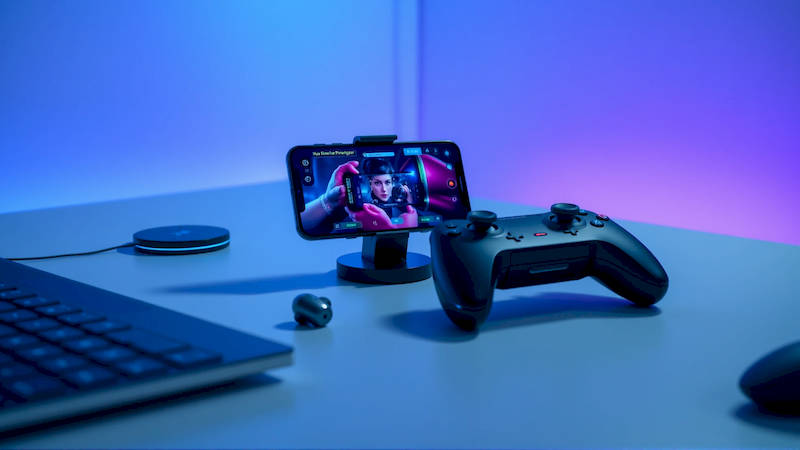
Standalone Bluetooth controllers, such as the Xbox Wireless Controller or the 8BitDo Pro 2, connect to your smartphone via Bluetooth, functioning similarly to controllers used with consoles or PCs. They offer greater versatility as they’re not tied to one specific phone, and can be used with multiple devices. However, they don't provide physical mounting, so you may need to use a separate phone mount or stand. These controllers often require more setup initially, but offer broader compatibility.
Finally, hybrid controllers attempt to bridge the gap between the two, offering both clip-on functionality and Bluetooth connectivity. These solutions often provide the best of both worlds, but may come at a higher price point. Consider carefully what type of games you play; a fast-paced shooter benefits from the secure grip of a clip-on, while a strategy game doesn’t necessarily require the same level of physical connection.
The Benefits Beyond Touch: Why Use a Controller?
The advantages of using a specialized mobile gaming controller stretch far beyond simply having physical buttons. While the initial appeal is often the improved precision and control, the benefits are more profound and wide-ranging. First and foremost, physical controls offer superior tactile feedback, allowing players to feel their inputs and react more instinctively. This is particularly crucial in action-packed games where split-second decisions can mean the difference between victory and defeat. Touchscreens, while responsive, lack this crucial tactile element, often leading to misclicks and delayed reactions.
Furthermore, controllers dramatically enhance ergonomics. Long gaming sessions on a smartphone can lead to hand fatigue and discomfort, but a properly designed controller fits comfortably in your hands, distributing weight more evenly and reducing strain. This is essential for marathon gaming sessions or competitive tournaments. Beyond comfort and control, many controllers boast additional features like programmable buttons, adjustable triggers, and customizable sensitivity settings. These features allow players to tailor their setup to their specific preferences and optimize their performance to a level unattainable with touch controls. “The biggest advantage is repeatability,” states professional Call of Duty: Mobile player, Kai “Kaiser” Lee. “With a controller, I can consistently execute the same precise movements, giving me a huge edge in gunfights.”
Compatibility and Connectivity: Ensuring a Seamless Experience
Before investing in a mobile gaming controller, it is crucial to verify compatibility with your smartphone and the games you intend to play. Not all controllers are created equal, and some may not work with certain devices or game titles. Android compatibility is generally more widespread than iOS, but it’s still essential to check the manufacturer’s specifications. Pay attention to whether the controller supports your phone's operating system version and if the games you play natively support controller input. Many games require enabling controller support in their settings.
Bluetooth connectivity is the most common method for connecting controllers, ensuring broad compatibility with a range of devices. However, some controllers utilize proprietary wireless technologies or require a wired connection. Latency – the delay between your input and the game's response – is a critically important factor. Look for controllers that offer low-latency Bluetooth connections or utilize wired connections for the most responsive experience. The Bluetooth version matters too; Bluetooth 5.0 and later offer improved speed and stability.
Customization and Configuration: Tailoring the Controller to Your Playstyle
One of the biggest strengths of dedicated mobile gaming controllers is their customizability. Most controllers allow you to remap buttons, adjust joystick sensitivity, and tweak other settings to create a personalized gaming experience. Utilize the manufacturer’s software (often available as a mobile app) to explore these customization options. Remapping buttons can be particularly beneficial for optimizing control schemes in games that don't have native controller support or for creating a layout that better suits your reflexes and preferences.
Beyond button mapping, consider adjusting the joystick sensitivity to match your play style. Higher sensitivity allows for quicker turns and more precise aiming, while lower sensitivity provides greater control and stability. Some controllers also offer adjustable trigger sensitivity, allowing you to fine-tune the response for shooting or acceleration. Experiment with different settings and find what works best for you. Many pro players spend hours fine-tuning their controllers for optimal performance in specific games.
Beyond Gaming: Leveraging Controllers for Other Mobile Tasks
While designed primarily for gaming, mobile gaming controllers can also be surprisingly useful for other mobile tasks. The joysticks and buttons can be repurposed for navigation, scrolling, and even media control. For example, you can use the joystick to navigate a large spreadsheet or presentation, or use the shoulder buttons to control volume or playback. This expands the usability of the controller beyond gaming, making it a versatile accessory for everyday mobile use.
Furthermore, some controllers can be used as external input devices for mobile photography and videography. The buttons can be mapped to trigger the shutter or start/stop recording, providing a more stable and precise control than the on-screen buttons. This can be particularly helpful for taking selfies or recording videos in challenging conditions. This versatility adds significant value to a gaming controller, turning it into a multi-purpose accessory.
Maintaining and Caring for Your Controller: Longevity and Performance
Investing in a high-quality mobile gaming controller is only half the battle. Proper maintenance and care are essential for ensuring longevity and maintaining optimal performance. Regularly clean the controller, removing dust, dirt, and grime that can accumulate around the buttons and joysticks. Avoid exposing the controller to extreme temperatures or moisture, as this can damage the internal components.
Store the controller in a safe place when not in use, protecting it from accidental drops and impacts. For clip-on controllers, periodically check the mounting mechanism to ensure it’s secure and doesn’t damage your smartphone. Batteries also require attention. If the controller uses rechargeable batteries, follow the manufacturer’s instructions for charging and storage to maximize battery life.
Conclusion: Embracing the Next Level of Mobile Gaming
Specialized mobile gaming controllers represent a significant step forward in the evolution of mobile gaming. They offer superior precision, comfort, and customization, empowering players to unlock their full potential and enjoy a more immersive gaming experience. By understanding the different types of controllers available, carefully considering compatibility, and taking the time to customize your setup, you can transform your smartphone into a powerful gaming machine. Ultimately, the choice to embrace a controller depends on your individual gaming habits and preferences. However, for those seeking a competitive edge or simply a more enjoyable gaming experience, a specialized mobile gaming controller is an investment well worth considering. The mobile gaming market is continually shifting, but one thing remains clear: the demand for enhanced control and immersive gameplay will only continue to grow, making the optimized mobile gaming controller a crucial tool for any serious gamer.
Deja una respuesta