
The Impact of Eye-Tracking Technology on Next-Gen VR Headsets
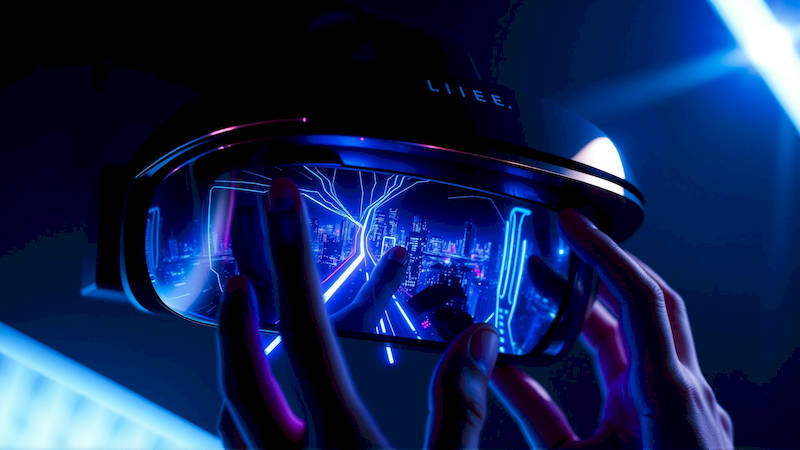
Virtual Reality (VR) has long promised a truly immersive experience, aiming to blur the lines between the digital and physical worlds. While advancements in display technology and processing power have propelled VR forward, a critical piece of the puzzle has often been missing: natural interaction. Historically, VR interactions have felt clunky, relying heavily on controllers and limited gestures. However, the integration of eye-tracking technology is poised to fundamentally change this, unlocking a new era of intuitive, responsive, and deeply personal VR experiences. This isn't just about accurately knowing where a user is looking, but about understanding why - inferring intent, optimizing rendering, and ultimately, fostering a more believable and engaging virtual presence.
The impact extends far beyond gaming. From training simulations to therapeutic applications and collaborative design, eye-tracking is paving the way for VR to become a powerful tool in a multitude of sectors. Its ability to create foveated rendering—rendering only where the user is looking in high detail—is a game-changer for performance, enabling higher fidelity visuals without requiring exponentially more powerful hardware. As the technology matures and becomes more accessible, it will become an indispensable component of next-generation VR headsets, dictating not just how we interact with virtual worlds, but also how real those worlds feel.
- Understanding the Fundamentals of Eye-Tracking in VR
- Foveated Rendering: A Performance Breakthrough Enabled by Eye-Tracking
- Enhancing Social Presence and Avatars with Gaze Data
- Eye-Tracking as a Novel Input Method for VR Interaction
- Challenges and Future Directions in Eye-Tracking VR
- Conclusion: The Future is in the Eyes
Understanding the Fundamentals of Eye-Tracking in VR
Eye-tracking in VR isn't simply a camera pointed at the eyes; it’s a sophisticated system relying on a combination of hardware and software. Most contemporary VR headsets utilize infrared (IR) light and specialized cameras to map the position and movement of the pupils and corneal reflections. The principle is based on the Purkinje images – the reflections of light sources on the cornea. By analyzing these reflections and the pupil’s center, the system calculates the user’s gaze point – determining exactly where the user is looking within the virtual environment with remarkable precision. This data is then translated into actionable input for the VR software.
The accuracy of this tracking is crucial. Early iterations suffered from issues like calibration difficulties, latency, and susceptibility to individual variations in eye characteristics. Modern systems, however, employ advanced algorithms and machine learning to compensate for these factors. Several companies, like Tobii and Varjo, have become leaders in this space, refining the hardware and software components to achieve sub-millimeter accuracy and low latency – essential for creating a believable and comfortable VR experience. The combination of high sampling rates (tracking eye movements hundreds of times per second) and precise gaze data minimizes the discrepancies between real and virtual viewpoints.
Furthermore, eye-tracking isn't solely about position. It also captures pupil dilation, providing valuable insights into cognitive load, emotional state, and even fatigue levels. This biometric data opens possibilities for adaptive VR experiences that respond to the user's internal state, further enhancing immersion and personalization. This adds another layer of complexity and potential to what eye-tracking can bring to the VR landscape.
Foveated Rendering: A Performance Breakthrough Enabled by Eye-Tracking
One of the most significant benefits of eye-tracking in VR is its ability to enable foveated rendering. Human vision isn’t uniform; we only perceive details sharply within a small area of focus – the fovea. The rest of our visual field is rendered at a lower resolution, and we rarely notice the difference. Foveated rendering leverages this biological characteristic to dramatically improve VR performance. By tracking the user’s gaze, the system dynamically renders the area the user is looking at in full resolution while reducing the resolution of peripheral areas.
This translates to massive savings in processing power. Rendering high-resolution graphics is computationally expensive, a major bottleneck for VR performance. Foveated rendering allows developers to significantly reduce the rendering load without a noticeable visual impact; in fact, improvements to peripheral view clarity can be made subtle enough as to actually improve user experience. Early adopters experienced gains in frame rates by as much as 50% with minimal subjective loss in visual quality. This allows for increased graphical fidelity, higher resolutions, or the ability to run VR applications on less powerful hardware.
Companies like NVIDIA and AMD are actively incorporating foveated rendering support into their drivers and SDKs, further accelerating its adoption. The rise of variable rate shading (VRS), a related technique, compliments foveated rendering by allowing for dynamic adjustment of shading quality based on visual importance. The collaboration between hardware and software is vital for realizing the full potential of this technology, making high-fidelity VR more accessible.
Enhancing Social Presence and Avatars with Gaze Data
VR's potential as a social platform relies heavily on creating a sense of presence - the feeling of actually being there with other people. Traditional VR avatars often feel lifeless and disconnected, lacking the subtle cues that make human interaction natural. Eye-tracking addresses this challenge by enabling realistic eye movements in avatars, dramatically improving non-verbal communication and social presence. Matching gaze direction, pupil dilation, and blink rate in avatars can significantly increase the feeling of connection and empathy between users.
Research consistently demonstrates that avatars with realistic eye movements are perceived as more engaging, trustworthy, and human-like. A study by Stanford University's Virtual Human Interaction Lab found that participants reported a greater sense of social presence when interacting with avatars that had dynamically tracked eye movements. This has profound implications for applications like virtual meetings, remote collaboration, and social VR experiences.
Beyond simply mirroring the user's gaze, eye-tracking can also be used to infer intent and emotional state, leading to more nuanced avatar expressions. For instance, prolonged eye contact might indicate interest or engagement, while averted gaze could suggest discomfort or disinterest. This subtle communication layer enriches social interactions and makes virtual environments feel more alive.
Eye-Tracking as a Novel Input Method for VR Interaction
The future of VR interaction isn’t just about controllers and hand tracking; it’s about utilizing our natural gaze as a primary input method. While directly controlling complex tasks solely with eye movements is currently limited, eye-tracking can be seamlessly integrated with other modalities to create more intuitive and efficient interaction schemes. For example, users could select menu items, confirm actions, or manipulate objects simply by dwelling their gaze on them for a short period.
Combining gaze control with hand gestures opens up exciting possibilities. Imagine selecting a tool in a virtual workshop with your eyes and then manipulating it with your hands. This hybrid approach leverages the strengths of both input methods, creating a fluid and natural interaction flow. Importantly, dwell times need to be carefully calibrated; too short, and accidental selections occur, too long, and the interaction feels sluggish.
Moreover, eye-tracking can be used for adaptive user interfaces. The system can automatically highlight interactive elements based on the user’s gaze, reducing the cognitive load and making it easier to navigate complex virtual environments. This ‘smart interface’ approach promises to make VR more accessible to a wider range of users, regardless of their technical expertise.
Challenges and Future Directions in Eye-Tracking VR
Despite its immense potential, eye-tracking in VR still faces several challenges. Calibration remains a significant hurdle; ensuring accurate tracking across a diverse range of users with varying eye shapes and vision correction is an ongoing process. “Drift,” where the tracked gaze point gradually deviates from the actual gaze point, is another issue that needs to be addressed. Advancements in machine learning and algorithmic optimizations are steadily improving calibration accuracy and reducing drift, but further refinement is necessary.
Cost is also a factor. While eye-tracking is becoming more affordable, it still adds a significant premium to the price of VR headsets. Making the technology more accessible is crucial for widespread adoption. Looking ahead, we can expect to see eye-tracking integrated into a wider range of VR headsets, and advancements in miniaturization and power efficiency will further drive down costs. Improvements to data privacy and security are also paramount. Addressing concerns about the collection and use of sensitive biometric data is vital for building trust and fostering responsible innovation.
Finally, research into the long-term effects of prolonged eye-tracking usage is crucial. Careful consideration must be given to potential eye strain or discomfort. Future developments may include dynamic adjustment of tracking intensity based on user feedback and environmental factors.
Conclusion: The Future is in the Eyes
The integration of eye-tracking into next-generation VR headsets represents a pivotal moment in the evolution of virtual reality. From enabling foveated rendering, which unlocks new levels of graphical fidelity and performance, to enhancing social presence and creating more natural interaction, eye-tracking is fundamentally transforming the VR experience. The ability to understand where and how users are looking allows for a level of personalization and responsiveness previously unattainable.
The challenges surrounding calibration, cost, and data privacy remain, but ongoing research and development are steadily addressing these concerns. As the technology matures and becomes more accessible, eye-tracking will undoubtedly become an indispensable component of future VR headsets, opening up a world of possibilities for gaming, training, collaboration, and beyond. The future of VR isn't just about seeing a virtual world – it's about interacting with it in a way that feels truly natural and intuitive, and the gaze will be the key that unlocks these possibilities. The actionable next step for developers is to actively explore and integrate eye-tracking SDKs into their applications to harness its capabilities and prepare for the next era of immersive VR experiences.
Deja una respuesta