
Using machine learning to identify rare diseases from medical images
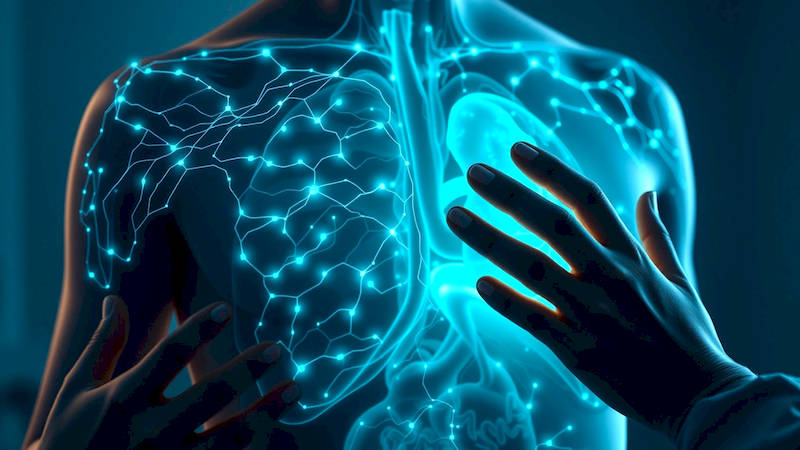
The quest to diagnose rare diseases is often a harrowing journey for patients and medical professionals alike. Affecting an estimated 300 million people worldwide, these conditions, individually uncommon, collectively represent a significant health burden. However, the very nature of their rarity presents immense diagnostic challenges. Symptoms can be vague, mimicking more common ailments, and clinicians often lack the specialized knowledge needed for accurate identification. This diagnostic odyssey, frequently spanning years, delays treatment, hindering patient outcomes and eroding quality of life. Fortunately, advances in artificial intelligence, particularly machine learning, are offering a beacon of hope, providing innovative tools to analyze medical images and accelerate the identification of these elusive conditions - shifting the paradigm from years of uncertainty to faster, more accurate diagnoses.
The power of machine learning lies in its ability to discern subtle patterns within complex data, patterns often imperceptible to the human eye. In the context of rare diseases, this is revolutionary. Medical images – X-rays, MRIs, CT scans, retinal images, and histopathology slides – hold a wealth of information, and these algorithms are adept at extracting clinically relevant features. Beyond simply seeing what a radiologist sees, these algorithms quantify subtle variations and correlations, building a powerful diagnostic aid. This is particularly critical in conditions where visual manifestations are atypical or appear late in the disease progression. The potential to leverage existing image data, routinely collected as part of standard clinical practice, makes this approach particularly scalable and cost-effective.
- The Power of Convolutional Neural Networks (CNNs) in Medical Image Analysis
- Tackling the Data Scarcity Challenge: Federated Learning and Synthetic Data
- Specific Rare Disease Applications: Case Studies & Examples
- The Role of Multi-Modal Data Integration and Beyond Imaging
- Addressing Ethical Considerations and Regulatory Hurdles
- Conclusion: A Future Empowered by AI-Driven Rare Disease Detection
The Power of Convolutional Neural Networks (CNNs) in Medical Image Analysis
Convolutional Neural Networks (CNNs) have quickly become the dominant architecture in image recognition tasks, and their application to medical imaging is proving transformative. Unlike traditional image analysis techniques that rely on manually engineered features, CNNs learn these features directly from the data. This “feature learning” capability allows them to capture intricate details relevant for rare disease identification that might otherwise be missed. CNNs achieve this through a series of convolutional layers, pooling layers, and fully connected layers. Convolutional layers identify patterns within the image, pooling layers reduce dimensionality, and fully connected layers make the final classification.
The success of CNNs relies on being trained with a substantial, labeled dataset. However, acquiring sufficient labeled data for rare diseases is a significant hurdle. Researchers are employing several strategies to address this, including data augmentation techniques (rotating, flipping, and scaling images to artificially increase dataset size) and transfer learning (leveraging pre-trained models on large datasets, like ImageNet, and fine-tuning them for the specific rare disease task). For example, a CNN originally trained to identify cats and dogs can be adapted to recognize subtle bone abnormalities indicative of a rare skeletal dysplasia. The initial training provides a baseline understanding of image features, which can then be refined with a smaller dataset of disease-specific images.
Another crucial aspect is the development of explainable AI (XAI) techniques. While CNNs excel in accuracy, they are often considered “black boxes” – it’s difficult to understand why a particular diagnosis was made. XAI aims to provide clinicians with insights into the algorithm’s decision-making process, highlighting the areas of the image that were most influential in the classification. This builds trust and allows clinicians to validate the AI's findings with their clinical expertise.
Tackling the Data Scarcity Challenge: Federated Learning and Synthetic Data
As previously mentioned, the limited availability of labeled medical images for rare diseases constitutes a major roadblock for effective machine learning model training. Federated learning and the generation of synthetic data are two promising strategies to overcome this challenge. Federated learning allows models to be trained across multiple institutions without sharing sensitive patient data. Instead of centralizing images, the algorithm is distributed to each institution, trained locally, and then the model updates are aggregated to create a global model.
This approach preserves patient privacy and allows researchers to leverage data from diverse populations, increasing model generalizability. However, complexities arise in dealing with data heterogeneity across different hospitals – variations in image acquisition protocols, patient demographics and disease presentation can impact model performance. Sophisticated federated learning algorithms are being developed to account for these variations.
Synthetic data, generated by AI, offers another avenue to augment limited datasets. Generative Adversarial Networks (GANs) are commonly used to create realistic medical images that resemble real patient scans. The key is ensuring the synthetic data retains the essential characteristics of the rare disease while avoiding introducing artifacts or biases. While synthetic data doesn’t replace real data, it can significantly improve model performance when used in conjunction with existing datasets, providing the necessary samples to train robust algorithms.
Specific Rare Disease Applications: Case Studies & Examples
The application of machine learning to medical images is yielding promising results across various rare diseases. Take, for example, the diagnosis of Fabry disease, a genetic disorder causing accumulation of lipids in lysosomes. Retinal images can reveal characteristic “whorl-like” patterns, but these are subtle and easily missed. Machine learning algorithms trained on a dataset of Fabry disease retinal images have demonstrated high accuracy in identifying these patterns, assisting ophthalmologists in early detection.
Another compelling application is in the identification of skeletal dysplasias, a group of over 400 different genetic conditions affecting bone and cartilage development. Algorithms analyzing pediatric X-rays can detect subtle skeletal abnormalities – changes in bone shape, size, and density – that can indicate a specific dysplasia. Early diagnosis is critical, as intervention can improve long-term outcomes and quality of life.
Furthermore, AI is increasingly used in the diagnosis of rare genetic skin conditions. Algorithms trained on dermatological images can differentiate between visually similar conditions, aiding dermatologists in reaching an accurate diagnosis faster and more reliably. For instance, identifying specific patterns in skin lesions can help distinguish between different types of epidermolysis bullosa, a group of genetic disorders causing fragile skin.
The Role of Multi-Modal Data Integration and Beyond Imaging
While medical images are a powerful source of information, integrating them with other data modalities—genomic data, clinical notes, laboratory results—can further enhance diagnostic accuracy. Multi-modal machine learning seeks to combine these different data sources into a unified model. For instance, combining MRI data with genomic information associated with a particular rare genetic condition can create a powerful predictive model for disease risk and progression.
This approach acknowledges the complex interplay of genetic and environmental factors in rare disease etiology. The challenges lie in handling the diverse data formats, ensuring data privacy, and developing algorithms that can effectively integrate and interpret the information. Researchers are exploring techniques like attention mechanisms, which allow the model to focus on the most relevant data modalities for a particular patient.
Beyond diagnosis, machine learning is also being applied to predict disease progression and personalize treatment strategies. By analyzing imaging data over time, algorithms can identify patterns that indicate how a disease is likely to evolve, helping clinicians tailor treatment plans to individual patient needs.
Addressing Ethical Considerations and Regulatory Hurdles
The deployment of AI in healthcare necessitates careful consideration of ethical and regulatory implications. Patient data privacy is paramount. Robust data security measures and adherence to regulations like HIPAA (Health Insurance Portability and Accountability Act) are crucial. Algorithmic bias is another significant concern. If the training data is not representative of the entire population, the algorithm may perform poorly on underrepresented groups, exacerbating existing health inequalities.
Thorough validation and testing across diverse patient populations are essential to mitigate bias. Furthermore, transparency and explainability are critical, as clinicians need to understand how the algorithm arrives at its conclusions. Regulatory frameworks, such as those developed by the FDA (Food and Drug Administration), are evolving to address the unique challenges posed by AI-based medical devices. These frameworks define requirements for data quality, algorithm validation, and ongoing monitoring to ensure patient safety and efficacy. Ongoing research into fairness, accountability, transparency, and ethics (FATE) in AI is vital.
Conclusion: A Future Empowered by AI-Driven Rare Disease Detection
Machine learning is poised to revolutionize the diagnosis and management of rare diseases. By leveraging the power of algorithms to extract hidden patterns from medical images and integrate them with other clinical data, we can overcome the challenges of data scarcity, diagnostic delay, and treatment variability. The development of advanced techniques like CNNs, federated learning, and synthetic data generation are accelerating progress. While ethical and regulatory hurdles remain, ongoing research and collaboration between clinicians, data scientists, and regulatory agencies are paving the way for a future where rare diseases are diagnosed earlier, treatments are personalized, and patients receive the timely care they deserve.
The key takeaways are: machine learning offers a powerful new tool for rare disease diagnosis; data scarcity is a major challenge, but strategies like federated learning and synthetic data generation offer solutions; multi-modal data integration can further enhance diagnostic accuracy; and ethical considerations and regulatory compliance are paramount. The next steps involve continued research, larger-scale clinical trials, and the development of robust, validated AI-based diagnostic tools that can seamlessly integrate into the clinical workflow, ultimately improving the lives of millions affected by these often-overlooked conditions.
Deja una respuesta