
Developing Autonomous Underwater Robots for Marine Exploration
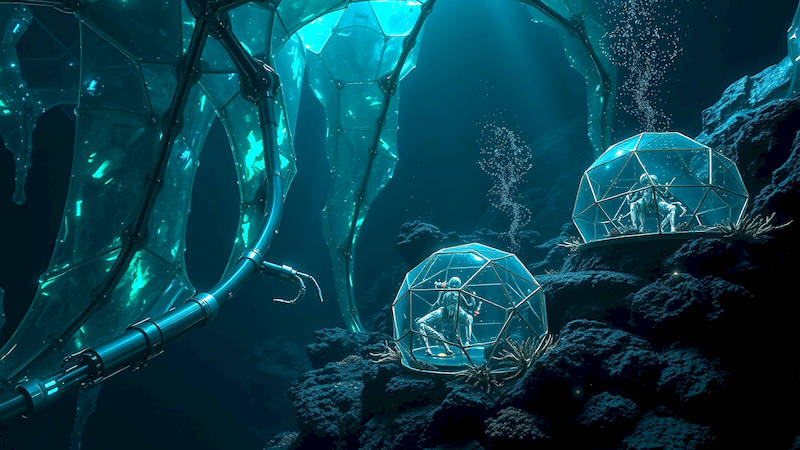
The ocean covers over 70% of Earth’s surface, yet remains largely unexplored. This vast, mysterious realm holds countless secrets, from undiscovered species and geological formations to vital clues about our planet’s past and potential future. Traditional marine exploration methods, relying on manned submersibles and remotely operated vehicles (ROVs), are often costly, time-consuming, and limited in scope. However, a new wave of technology is poised to revolutionize our ability to understand and interact with the underwater world: autonomous underwater robots (AURs). These robots, unburdened by the need for direct human control or a tethered connection, offer the potential for persistent, wide-area monitoring and detailed investigation in even the most challenging marine environments.
The development of AURs is not merely a technological feat; it’s a necessity driven by pressing global concerns. Climate change, pollution, and overfishing are dramatically impacting marine ecosystems, and a greater understanding of these changes is critical. AURs can provide the long-term data sets needed to track these trends, assess environmental damage, and inform effective conservation strategies. Furthermore, they play a crucial role in infrastructure inspection, resource management, and even underwater archaeology, opening up new frontiers in our exploration and understanding of Earth’s oceans. This article delves into the intricacies of developing these advanced systems, exploring the key challenges, emerging technologies, and potential future applications.
Navigation and Localization in the Underwater Environment
Navigating underwater presents a unique set of challenges compared to terrestrial robotics. The absence of GPS signals necessitates the development of alternative positioning systems. Historically, Long Baseline (LBL) acoustic positioning was a mainstay, relying on a network of seafloor transponders to triangulate a robot's position. However, LBL systems are expensive to deploy and maintain, and their accuracy can be affected by environmental factors like water temperature and salinity. More recently, researchers have been focusing on Simultaneous Localization and Mapping (SLAM) techniques, adapted for underwater environments. These approaches involve the robot building a map of its surroundings while simultaneously determining its own location within that map, using sensors like sonar and inertial measurement units (IMUs).
Underwater SLAM is significantly more complex than its terrestrial counterpart due to the challenges of acoustic signal propagation. Sound waves can be distorted, reflected, and absorbed by the water column, leading to inaccurate range measurements. Developing robust algorithms that can filter out noise and compensate for these distortions is a major area of research. Visual SLAM, utilizing underwater cameras, is also gaining traction, but is limited by visibility conditions which are often poor in many marine environments. A promising avenue is the fusion of multiple sensor modalities – combining acoustic, visual, and inertial data – to create a more reliable and accurate navigation system.
Finally, truly autonomous operation requires the AUR to contend with strong currents, unpredictable underwater terrain, and potential disturbances from marine life. Advanced control algorithms are needed to maintain stability, avoid obstacles, and efficiently navigate to desired locations. Consider the case of the Autosub Long Range, a British autonomous underwater vehicle that successfully completed a 500km mission under the ice in Antarctica, demonstrating the effectiveness of sophisticated navigation and control systems in extremely challenging conditions.
Power Systems and Endurance
One of the most limiting factors in AUR development is power. Batteries offer a relatively simple solution, but their energy density is limited, restricting mission duration. Lithium-ion batteries are currently the most common choice, but they pose safety concerns related to thermal runaway and require careful management. Increasing battery capacity, while desirable, adds weight and bulk to the vehicle, potentially impacting maneuverability and energy efficiency. Furthermore, the cold temperatures of deep-sea environments can significantly reduce battery performance.
Alternative power sources are actively being investigated. Fuel cells, which generate electricity through a chemical reaction, offer higher energy density than batteries but require a constant supply of fuel, such as hydrogen. Another promising approach is energy harvesting – extracting power from the surrounding environment. Options include harvesting energy from temperature gradients, salinity gradients, or even from the movement of ocean currents. While these technologies are still in their early stages of development, they hold the potential to significantly extend mission endurance.
Beyond the power source itself, optimizing energy consumption is paramount. Efficient propulsion systems, streamlined vehicle designs, and intelligent power management algorithms are all crucial. For example, the REMUS 6000, built by Woods Hole Oceanographic Institution, is capable of operating autonomously for up to 24 hours on a single charge, achieving this through a combination of high-capacity batteries, a low-power propulsion system, and careful mission planning.
Sensor Suites and Data Acquisition
An AUR's value lies in its ability to collect meaningful data about the marine environment. The specific sensor suite will depend on the mission objectives, but common sensors include: sonar (for mapping and object detection), cameras (for visual inspection and species identification), sensors for measuring environmental parameters (temperature, salinity, pressure, dissolved oxygen, etc.), and specialized sensors for detecting specific phenomena (e.g., methane plumes, hydrocarbons).
Integrating these sensors effectively and managing the resulting data stream is a significant challenge. Data storage capacity is limited, requiring intelligent data compression techniques and the ability to prioritize data collection based on mission goals. Real-time data processing onboard the vehicle can reduce the amount of data that needs to be transmitted, but this requires significant computational resources and power. The development of low-power, high-performance embedded systems is critical for enabling onboard data analysis.
Consider the Blue Planet Wavertail AUV, used for subsea pipeline inspection. It utilizes high-resolution sonar and optical cameras to identify corrosion, damage, and other defects. The data collected is processed onboard to generate a detailed report on the pipeline’s condition, significantly reducing the need for costly and time-consuming manual inspections.
Communication and Data Transfer
Communicating with an AUR underwater is notoriously difficult. Radio waves do not travel well through water, limiting the range of wireless communication. Acoustic communication is the most common approach, but it suffers from low bandwidth and susceptibility to noise and interference. The speed of sound in water is also relatively slow, resulting in significant delays.
Researchers are exploring several strategies to improve underwater communication. Optical communication, utilizing blue-green light, offers much higher bandwidth than acoustic communication, but is limited by range and requires clear water conditions. Modulation schemes are being developed to increase the efficiency of acoustic communication and reduce the effects of noise. Another promising approach is the use of underwater acoustic networks, where multiple AUVs cooperate to relay data back to a surface station.
When real-time communication is not possible, AUVs must store data onboard and transmit it when they surface or dock with a base station. This requires efficient data compression and the development of reliable docking mechanisms. Satellites can be used to relay data from surfaced AUVs, extending their operational range. However, data transmission rates are typically limited, and the availability of satellite coverage can be an issue in remote ocean regions.
Control Architectures and Artificial Intelligence
Early AURs relied on pre-programmed mission plans, limiting their ability to adapt to changing conditions. Modern AURs increasingly incorporate artificial intelligence (AI) to enhance their autonomy and decision-making capabilities. AI algorithms can be used for a variety of tasks, including: obstacle avoidance, target recognition, path planning, and adaptive sampling.
Machine learning techniques, such as reinforcement learning, are proving particularly effective for training AUVs to navigate complex environments and achieve specific goals. For example, an AUV could be trained to efficiently map a coral reef, adapting its search pattern based on the density and distribution of coral formations. Computer vision plays a vital role in object detection and recognition. Sophisticated algorithms are being developed to identify different species of marine life, detect anomalies, and assess the health of marine ecosystems.
Control architectures are evolving from centralized to decentralized approaches. Distributed control systems, where multiple AUVs cooperate and share information, offer increased robustness and adaptability. Swarm robotics, where a large number of simple AUVs work together to achieve a common goal, is a rapidly growing field. These strategies are inspired by the collective behavior of biological organisms, such as schools of fish or flocks of birds.
Challenges and Future Directions
Despite significant progress, numerous challenges remain in the development of autonomous underwater robots. Scaling up production while reducing costs is a key priority. Improving the reliability and durability of AUVs is also essential, particularly for long-duration missions in harsh environments. Addressing concerns about the environmental impact of AUVs, such as noise pollution and potential disturbance to marine life, is critical for ensuring their responsible use.
Looking ahead, we can expect to see several key trends in AUR development. The integration of advanced materials, such as soft robotics components, will enable the creation of more flexible and adaptable robots. The development of more sophisticated AI algorithms will unlock new levels of autonomy and decision-making capabilities. The convergence of AUVs with other technologies, such as underwater drones and sensor networks, will create a more comprehensive and integrated system for marine exploration. The widespread adoption of AURs will usher in a new era of ocean discovery and understanding, providing us with the tools we need to protect and manage this vital resource.
Conclusion
Developing autonomous underwater robots is a complex undertaking, demanding innovation across a multitude of engineering and scientific disciplines. From perfecting navigation in the absence of GPS, to ensuring sustained power, and equipping these robots with intelligent sensors and communication systems, the challenges are substantial. However, the potential rewards – a deeper understanding of our oceans, improved monitoring of marine ecosystems, and enhanced capabilities for underwater exploration and resource management – are immense.
The key takeaways from this discussion are the importance of multi-sensor data fusion for accurate positioning, the need for innovative power solutions beyond traditional batteries, and the crucial role of AI in enabling genuine autonomy. Looking ahead, continued investment in research and development, coupled with a commitment to responsible environmental stewardship, will be essential for realizing the full potential of these remarkable machines. The future of marine exploration is undoubtedly underwater, and that future is being built by the tireless efforts of roboticists and engineers around the globe.
Deja una respuesta