
AI Techniques for Human-Robot Interaction and Collaboration
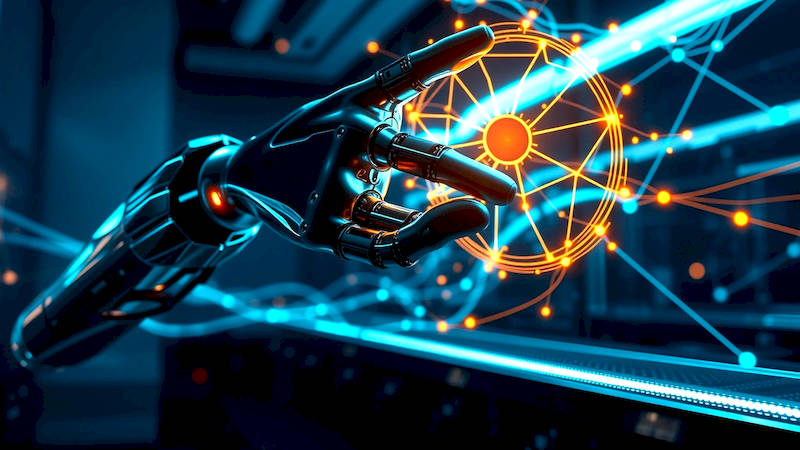
The convergence of artificial intelligence (AI) and robotics is rapidly transforming how humans and robots interact, moving beyond simple automation to genuine collaboration. For decades, robots were largely confined to repeating pre-programmed tasks in controlled environments. However, advances in AI, particularly in machine learning, computer vision, and natural language processing, are enabling robots to understand, predict, and respond to human behavior in more intuitive and flexible ways. This shift necessitates sophisticated techniques for human-robot interaction (HRI) that prioritize safety, efficiency, and user satisfaction. The potential impact is immense, spanning manufacturing, healthcare, eldercare, exploration, and even everyday domestic assistance.
The importance of effective HRI extends beyond simply avoiding collisions; it’s about building trust and seamless integration into human workflows. A robot that seems to understand a human’s intent, anticipates needs, and communicates effectively is far more likely to be accepted and successfully utilized. This article will delve into the key AI techniques powering this revolution, exploring how these technologies are being applied and the challenges that still lie ahead, and establishing a framework for understanding the evolution of collaborative robotics. The development of these systems isn't merely about technological advancement, but about shaping a future where humans and robots work synergistically, leveraging each other’s strengths.
- Natural Language Processing (NLP) for Conversational Robotics
- Computer Vision for Perception and Understanding
- Machine Learning for Predictive Behavioral Modeling
- Gesture Recognition and Biometric Sensors
- Safety and Trust in Collaborative Environments
- Conclusion: The Future of Human-Robot Collaboration
Natural Language Processing (NLP) for Conversational Robotics
Natural Language Processing forms the backbone of truly interactive robots, enabling them to understand and respond to human language. Early attempts at robotic communication relied on limited vocabularies and rigid command structures, but modern NLP techniques, leveraging deep learning models such as Transformers (BERT, GPT-3, and their successors), are facilitating far more nuanced and natural interactions. These models allow robots to not only comprehend the literal meaning of what is said but also infer intent, understand context, and even detect emotions.
Current applications range from voice-controlled robots in warehouses, guiding workers through tasks using spoken instructions, to socially assistive robots in healthcare settings providing companionship and medication reminders. A key challenge lies in handling the variability of human language: accents, slang, incomplete sentences, and ambiguity. Researchers are addressing this through techniques like data augmentation (creating synthetic training data) and transfer learning (adapting models pre-trained on large language datasets). Consider the work being done at Carnegie Mellon University with their ‘Athena’ robot, specializing in understanding complex instructions within a home setting.
Beyond speech recognition and parsing, NLP now encompasses natural language generation, allowing robots to articulate their own thoughts and responses in a human-like manner. This requires models that can construct grammatical, coherent, and contextually appropriate sentences. It’s worth noting that ethical considerations are paramount here; robots should clearly identify themselves as non-human and avoid deceptive conversational patterns. Specifically, the ability for robots to detect and appropriately respond to emotional cues within human speech is an evolving area, leverage sentiment analysis techniques, to enable more empathetic communication.
Computer Vision for Perception and Understanding
While NLP deals with auditory input, computer vision equips robots with the ability to "see" and interpret the visual world. This is crucial for recognizing objects, understanding scenes, tracking human movements, and gauging emotional states through facial expressions and body language. Deep learning architectures, particularly Convolutional Neural Networks (CNNs), have revolutionized computer vision, enabling robots to achieve unprecedented levels of accuracy in image and video analysis.
Modern robots utilize computer vision for a multitude of tasks. In manufacturing, robots can use vision systems to identify defective parts on an assembly line. In healthcare, they can assist surgeons with precise movements during minimally invasive procedures, or monitor patients for signs of distress. Social robots leverage computer vision to maintain eye contact, recognize familiar faces, and respond appropriately to gestures. However, robustness remains a key challenge. Variations in lighting conditions, occlusions, and the sheer complexity of real-world environments can significantly degrade the performance of vision systems. Adding depth sensing capabilities (through LiDAR or stereo vision) and incorporating contextual reasoning can help mitigate these issues.
A significant advancement is the use of semantic segmentation, where each pixel in an image is labeled with the object it belongs to. This provides the robot with a rich understanding of the scene and allows it to interact with objects in a more intelligent way. For instance, a robot tasked with clearing a table could use semantic segmentation to identify and isolate the dishes, cups, and cutlery from other objects. Furthermore, advancements in "pose estimation" allow robots to understand the three-dimensional orientation of objects and people, leading to more accurate grasping and manipulation.
Machine Learning for Predictive Behavioral Modeling
To truly collaborate with humans, robots need to anticipate our intentions and behaviors. This is where machine learning, particularly reinforcement learning (RL) and imitation learning, becomes invaluable. RL enables robots to learn through trial and error, optimizing their actions to maximize a reward signal. In the context of HRI, the reward signal could be based on metrics like task completion rate, human satisfaction, or safety.
Imitation learning allows robots to learn from human demonstrations. By observing a human performing a task, the robot can learn to replicate that behavior without explicit programming. This is particularly useful for tasks that are difficult to define explicitly or require nuanced skills. For example, a robot learning to assist a chef in a kitchen could learn from watching the chef prepare a meal. Often a hybrid approach is employed, combining RL with imitation learning, offering a robust solution tailored to specific applications.
A critical aspect of predictive modeling is handling uncertainty. Human behavior is inherently unpredictable, so robots must be able to cope with unexpected actions. This can be achieved through techniques like Bayesian reasoning, which allows the robot to update its beliefs based on new evidence. Expert systems can also be integrated, providing the robot with a knowledge base of common human interactions and potential responses. Researchers at MIT have been exploring ways to use machine learning to predict human needs based on subtle cues, allowing robots to proactively offer assistance.
Gesture Recognition and Biometric Sensors
Communication isn’t always verbal; humans convey a wealth of information through gestures, facial expressions, and even physiological signals. Robots equipped with gesture recognition capabilities and biometric sensors can harness this information to create more intuitive and responsive interactions. Advanced computer vision techniques are used to identify and interpret hand gestures, body postures, and facial expressions. Biometric sensors, such as heart rate monitors and skin conductance sensors, can provide insights into a person’s emotional state and cognitive load.
This technology has applications in a wide range of fields. In collaborative assembly tasks, a robot could respond to a worker's hand gestures to request assistance or indicate the desired next step. In healthcare, robots could monitor a patient’s facial expressions to detect pain or discomfort. In education, robots could adapt their teaching style based on a student’s level of engagement. A key challenge is distinguishing intentional gestures from unintentional movements. Filtering techniques and machine learning algorithms can help filter out noise and improve accuracy.
The integration of multi-modal sensing – combining computer vision, gesture recognition, and biometric data – promises even richer and more nuanced HRI. For instance, a robot could combine facial expression analysis with heart rate monitoring to assess a person’s stress level and respond accordingly. Ethical considerations regarding privacy and data security are particularly important when using biometric sensors.
Safety and Trust in Collaborative Environments
Perhaps the most crucial element of HRI is ensuring safety and building trust. A robot that poses a safety risk or fails to understand human needs will quickly be rejected. Safety can be achieved through a combination of hardware and software safeguards. These include force sensors, collision avoidance algorithms, and emergency stop mechanisms. However, technical solutions are only part of the equation.
Building trust requires transparency and predictability. Users need to understand why a robot is taking a particular action and be confident that it won’t behave unexpectedly. This can be achieved through clear communication, intuitive interfaces, and explainable AI (XAI) techniques. XAI aims to make the decision-making processes of AI systems more transparent and understandable to humans. For example, a robot could explain its reasoning for choosing a particular path or performing a specific task.
It’s crucial to consider the psychological aspects of HRI. Research shows that humans tend to anthropomorphize robots, attributing human-like qualities to them. While this can foster positive interactions, it can also lead to unrealistic expectations and feelings of betrayal if the robot behaves in a way that violates those expectations. Open communication about the robot’s capabilities and limitations is essential. The European Union’s development of ethical guidelines for trustworthy AI highlights the importance of responsible robot design and deployment.
Conclusion: The Future of Human-Robot Collaboration
AI-driven techniques are fundamentally reshaping human-robot interaction, evolving from simple command-response systems to intricate, collaborative partnerships. NLP, computer vision, machine learning, gesture recognition, and robust safety mechanisms are converging to create robots capable of understanding, anticipating, and adapting to human needs in increasingly complex environments. While significant progress has been made, challenges remain in areas such as handling ambiguity, building trust, and ensuring ethical considerations guide development.
The future of HRI hinges on several key areas: continued development of more robust and adaptable AI algorithms; the creation of more intuitive and user-friendly interfaces; and a focus on safety and explainability. Optimizing the integration of multi-modal sensing, taking into account the psychological aspects of the interaction, and prioritizing ethically-sound design principles will be critical. The potential benefits are vast, promising to unlock new levels of productivity, efficiency, and quality of life across a wide range of industries and applications. Actionable next steps involve investing in research and development, fostering collaboration between AI experts and human-centered designers, and engaging in public discourse about the societal implications of this transformative technology.
Deja una respuesta