
Edge Computing’s Impact on Real-Time Augmented Reality Applications
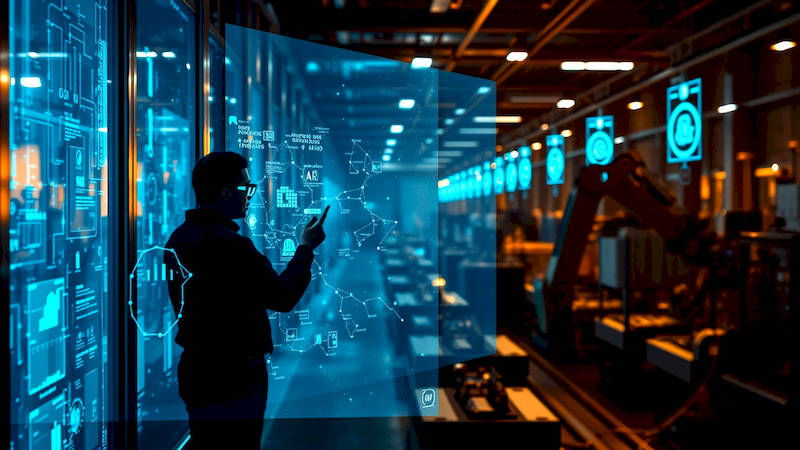
Augmented Reality (AR) is rapidly transitioning from a futuristic concept to a practical technology transforming industries from retail and healthcare to manufacturing and entertainment. However, the promise of truly immersive, real-time AR experiences is consistently hampered by limitations in processing power, network latency, and bandwidth. Traditional cloud-based AR architectures, while providing scalability, often struggle to deliver the low-latency performance necessary for seamless, interactive AR applications. This is where edge computing emerges as a pivotal enabler, bringing computation closer to the user and fundamentally changing the landscape of real-time AR. This article will delve into the symbiotic relationship between edge computing and AR, exploring the challenges it addresses, the architectures being deployed, real-world applications, and future trends shaping this exciting technological convergence.
The core appeal of AR – the overlay of digital information onto the real world – demands incredibly quick processing of visual data, sensor inputs, and user interactions. A delay of even a few milliseconds can shatter the illusion of presence and lead to a frustrating user experience. Initial AR applications could tolerate this latency as they were relatively simple. However, as AR becomes more sophisticated, incorporating object recognition, spatial mapping, and intricate virtual interactions, the need for real-time responsiveness becomes paramount. Relying solely on cloud processing introduces unacceptable latency due to the distance data must travel, the inherent variability of network conditions, and potential congestion. Therefore, a distributed computing model like edge computing is crucial to unlock the true potential of AR.
- The Bottlenecks of Cloud-Based AR and the Rise of Edge
- How Edge Computing Architectures Enable Real-Time AR
- Real-World Applications: From Manufacturing to Retail
- Overcoming Challenges in Edge AR Deployment
- The Role of 5G and Future Trends
- Conclusion: A Future Forged in Real-Time Immersive Experiences
The Bottlenecks of Cloud-Based AR and the Rise of Edge
Traditionally, AR applications have often functioned on a client-server model, where the AR device (smartphone, headset) captures data, sends it to a remote cloud server for processing, and then receives instructions for rendering the augmented view. While this approach leverages the vast computational power of the cloud, it introduces significant limitations. Network latency, as previously mentioned, is the primary culprit. Consider an AR application used in remote robotic surgery: even a minor delay in visual feedback could have catastrophic consequences. Furthermore, relying on a constant, stable internet connection presents a challenge in environments with limited or unreliable connectivity. The bandwidth requirements for streaming high-resolution video and complex 3D models can also quickly overwhelm network resources, particularly with numerous concurrent users.
Data privacy is another growing concern. Sending sensitive user data to the cloud for processing raises legitimate questions about security and compliance. Healthcare applications, for instance, must adhere to strict data protection regulations like HIPAA. Edge computing mitigates these risks by processing data locally on the device or a nearby edge server, reducing the amount of data transmitted and stored in the cloud. This localized processing offers a robust solution to latency and bandwidth issues while simultaneously enhancing data security. “The move to edge computing isn’t just about performance, it’s about fundamental shifts in how we approach data – keeping it closer to the source, and processing it in a more secure and efficient manner,” explains Dr. Anya Sharma, Chief Technology Officer at Spatial Innovations.
How Edge Computing Architectures Enable Real-Time AR
Implementing edge computing for AR isn’t a one-size-fits-all solution. Several architectural approaches cater to varying application requirements and constraints. One common model is device edge computing, where the processing is handled directly on the AR device itself. Modern smartphones and AR headsets are equipped with increasingly powerful processors and dedicated AI accelerators (like Apple’s Neural Engine or Qualcomm’s Snapdragon XR platforms) capable of handling significant computational tasks. This approach offers the lowest latency, as data doesn’t need to travel over a network, but it's limited by the processing power and battery life of the device.
Another architecture is near-edge computing, where processing is offloaded to a nearby edge server – a small data center located closer to the user, such as a 5G base station or a local server within a factory. This provides a balance between latency, processing power, and energy efficiency. The AR device sends data to the edge server, which performs the heavy lifting, and then streams the results back to the device for rendering. Multi-Access Edge Computing (MEC) is a key technology facilitating this approach, enabling the deployment of applications and services closer to the end-user by leveraging the existing cellular network infrastructure. A crucial aspect of these architectures is task offloading, intelligently determining which calculations are best performed locally on the device and which ones are suitable for the edge server.
Real-World Applications: From Manufacturing to Retail
The benefits of edge-powered AR are already visible across a diverse range of industries. In manufacturing, AR guided workflows using edge computing are enabling technicians to perform complex maintenance tasks with increased efficiency and accuracy. Instead of relying on paper manuals or remote experts, technicians wearing AR headsets can receive step-by-step instructions overlaid onto the equipment they’re working on. The edge server processes visual data to identify components and track progress, providing real-time feedback and error detection. Boeing, for example, has implemented AR-guided assembly processes that have reduced errors and accelerated production times.
In the retail sector, AR applications powered by edge computing are enhancing the customer experience. Imagine browsing a furniture store and using an AR app to virtually place a sofa in your living room. Edge computing can process the image of your room in real-time, accurately scaling and positioning the virtual furniture, and providing realistic lighting and shadowing. Sephora's Virtual Artist app uses AR to allow customers to virtually try on makeup, with edge computing enhancing the responsiveness and accuracy of the augmented view. Further applications are also found in training & education, healthcare and remote assistance, all achieving improvements through faster processing.
Overcoming Challenges in Edge AR Deployment
While the potential of edge computing for AR is immense, several challenges need to be addressed for widespread adoption. Security is paramount. Edge servers, often deployed in less-secure environments, are vulnerable to unauthorized access and data breaches. Robust security measures, including encryption, authentication, and intrusion detection systems, are essential. Management and orchestration of a distributed edge infrastructure presents another hurdle. Maintaining and updating software across numerous edge servers requires sophisticated tools and automation.
Interoperability between different edge platforms and AR devices is also crucial. Standardization efforts are underway to ensure that AR applications can seamlessly run across diverse edge environments. Furthermore, cost can be a significant barrier for smaller businesses. Deploying and maintaining a dedicated edge infrastructure can be expensive. Utilizing existing infrastructure like 5G base stations and exploring serverless edge computing models can help reduce costs. Effective power management on edge devices is also a growing concern, impacting deployment longevity.
The Role of 5G and Future Trends
The rollout of 5G networks is accelerating the adoption of edge computing for AR. 5G offers significantly lower latency, higher bandwidth, and increased network capacity compared to 4G, creating a more conducive environment for real-time AR applications. The combination of 5G and MEC is particularly powerful, enabling the deployment of highly responsive AR experiences in mobile environments. Moreover, advancements in artificial intelligence (AI) are playing a critical role. AI algorithms are being used to optimize task offloading, improve object recognition, and enhance the realism of AR renderings.
Future trends include the development of decentralized AR platforms based on blockchain technology, enabling secure and transparent data sharing and ownership. Spatial computing – the ability to understand and interact with the physical world in a more natural and intuitive way – will also be a key driver of AR innovation, and will require even more sophisticated edge computing capabilities. The convergence of AR, edge computing, and AI is poised to create a new wave of immersive and transformative applications that will reshape how we interact with the world around us.
Conclusion: A Future Forged in Real-Time Immersive Experiences
Edge computing is no longer a futuristic aspiration; it is the essential ingredient unlocked for delivering on the promise of real-time, immersive AR experiences. By minimizing latency, enhancing data security, and reducing reliance on cloud connectivity, edge computing is enabling a widening range of applications across diverse industries. From streamlining manufacturing processes to revolutionizing retail experiences and advancing remote healthcare, the impact of this convergence is already being felt. As 5G networks mature, AI algorithms become more sophisticated, and decentralized platforms emerge, the synergy between edge computing and AR will continue to evolve, paving the way for a future where the digital and physical worlds seamlessly blend into one continuous, interactive reality. The key takeaway is this: proactively explore edge computing solutions, understand the architectural options available, and strategically position yourself to leverage the transformative potential of real-time AR. Businesses and developers who embrace this technological convergence will be best positioned to thrive in the evolving landscape of spatial computing.
Deja una respuesta