
How to Choose the Right Portable Solar Charger for Your Outdoor Adventures
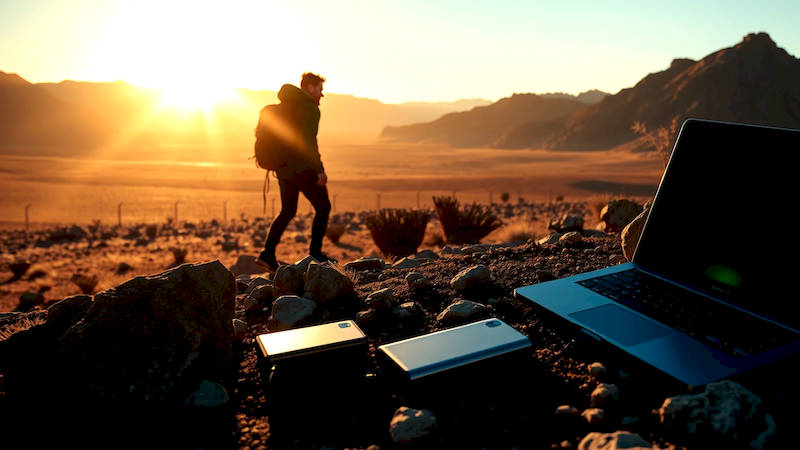
The allure of disconnecting from the grid and immersing oneself in nature is stronger than ever. However, modern adventures often rely on technology – smartphones for navigation, cameras to capture memories, GPS devices for safety, and even portable power banks to keep essential devices running. But what happens when you’re miles from an outlet? This is where portable solar chargers come into play, acting as a lifeline for the modern explorer. Choosing the right one, however, isn’t as simple as grabbing the cheapest panel. It requires careful consideration of your needs, the type of adventures you undertake, and the specific features available.
The portable solar charger market has exploded in recent years, offering a staggering array of options. From foldable panels designed for backpacking to rugged chargers for marine use, the choices can be overwhelming. Ignoring the key factors and diving in headfirst can lead to disappointment – a charger that’s too weak for your devices, too bulky to carry, or simply unreliable when you need it most. This guide will comprehensively explore everything you need to know to select the perfect portable solar charger, ensuring your outdoor adventures remain powered and connected, precisely when it matters.
- Understanding Your Power Needs: Wattage and Capacity
- Solar Panel Types: Monocrystalline, Polycrystalline, and Amorphous
- Form Factor and Portability: Foldable Panels vs. Rigid Panels
- Durability and Weather Resistance: Facing the Elements
- Additional Features: Power Banks, USB Ports, and Smart Technology
- Conclusion: Choosing the Power to Explore
Understanding Your Power Needs: Wattage and Capacity
Before even beginning to look at specific solar chargers, it’s critical to understand your power needs. This starts with identifying the devices you’ll be charging and their power requirements. This isn’t just about voltage (typically 5V for USB devices) but also about amperage and, consequently, wattage. Look at the power adapter for each device – it will list the output wattage. For example, a smartphone might require 5W-15W, a tablet 10W-20W, and a camera 20W-40W. Summing these up gives you an idea of the minimum wattage your solar charger should provide. Don't forget to factor in losses during conversion.
Beyond the wattage required to charge your devices, consider the capacity of the power bank you’ll be using (if any). A power bank stores energy for later use, allowing you to charge devices even when the sun isn’t shining. Capacity is measured in milliampere-hours (mAh) or watt-hours (Wh). A typical smartphone battery is around 3000-5000 mAh. Larger devices and multiple charges will require higher capacity power banks. The solar charger's role is to replenish that capacity, so understanding this interplay is vital. For instance, a 10W solar charger might take 8-10 hours of full sunlight to fully charge a 20,000 mAh power bank.
Finally, consider efficiency. Solar panels aren't 100% efficient; typically, they convert around 15-22% of sunlight into usable energy. This means a 20W panel might only deliver around 3-4W of actual charging power. High-quality panels generally have higher efficiency ratings, justifying their higher price points. As a rule of thumb, overestimate your power needs rather than underestimate them, especially in variable weather conditions.
Solar Panel Types: Monocrystalline, Polycrystalline, and Amorphous
The core of any solar charger is the solar panel itself, and these come in three main types: monocrystalline, polycrystalline, and amorphous (thin-film). Understanding their differences is crucial for making an informed decision. Monocrystalline panels are made from a single silicon crystal and are the most efficient (typically 17-22%) and expensive option. They perform best in direct sunlight and are generally the preferred choice for adventurers prioritising portability and power density. Their dark, uniform appearance is a visual identifier.
Polycrystalline panels are made from multiple silicon fragments melted together. They are less efficient (around 13-16%) than monocrystalline but also more affordable. They are a good compromise between cost and performance and perform reasonably well even in less-than-ideal conditions. They have a speckled, blueish appearance. Amorphous panels, also known as thin-film, are the least efficient (around 7-13%) and most flexible. They are often found in smaller, lightweight chargers but require a larger surface area to generate the same amount of power as crystalline panels. They’re best suited for situations where flexibility and low weight are paramount, and power demands are minimal. A quote from Dr. Emily Carter, a Materials Science Professor at Princeton University, highlights this: "The tradeoff between efficiency, cost, and flexibility dictates the optimal panel type. For serious outdoor enthusiasts needing reliable power, monocrystalline generally offers the best value."
To illustrate, if you’re planning a week-long backpacking trip and need to charge a smartphone, GPS, and headlamp, a monocrystalline panel delivering 20-30W would be a logical choice. However, if you’re kayaking and need a lightweight, flexible charger to trickle-charge a phone, an amorphous panel might suffice.
Form Factor and Portability: Foldable Panels vs. Rigid Panels
Solar chargers come in various form factors, each with its pros and cons. Foldable panels are the most popular choice for outdoor adventures, offering a balance of portability and power. They typically consist of interconnected solar cells mounted on a fabric backing that folds up into a compact package. They’re relatively lightweight and can be easily attached to a backpack. However, folded panels can be more susceptible to damage than rigid panels.
Rigid panels offer greater durability and often higher efficiency. They're usually encased in a protective frame, making them more resistant to impacts and weather. However, they’re bulkier and heavier than foldable panels, making them less ideal for backpacking or situations where weight is a critical concern. They are often favored for car camping or marine applications, where portability isn’t as paramount. Hybrids are also increasingly available - panels that utilize a hard case for protection with a folding mechanism.
The choice between foldable and rigid depends heavily on your activities. Hikers and backpackers will likely prioritize a lightweight, foldable panel, whereas car campers or sailors might prefer the durability of a rigid panel. Beyond the core structure, consider features like built-in USB ports, mounting grommets, and carry handles. These can significantly enhance usability in the field. Always check the packed size and weight specifications before making a purchase – a seemingly powerful charger is useless if it’s too cumbersome to carry.
Durability and Weather Resistance: Facing the Elements
Outdoor adventures inevitably expose your gear to harsh conditions. Ensuring your solar charger can withstand the elements is crucial for reliability. Look for chargers with durable materials, such as ripstop nylon or canvas, and waterproof or water-resistant construction. The IP rating (Ingress Protection rating) is a good indicator of a charger’s resistance to dust and water. An IP65 rating means the charger is dust-tight and protected against water jets, while IP67 means it can withstand immersion in water for a limited time.
Pay attention to the solar cells themselves. Tempered glass provides better protection than plastic laminates, reducing the risk of cracking or damage. Consider the quality of the stitching and seams on foldable panels; weak seams are prone to tearing. Also, the USB ports should have protective covers to prevent water damage. Case studies have shown that many cheap solar chargers fail within months of purchase due to poor materials and construction.
Remember that even “water-resistant” chargers aren’t entirely waterproof. Avoid exposing them to heavy rain or prolonged submersion. Always dry the charger thoroughly before storing it and take precautions to protect it from direct sunlight and extreme temperatures when not in use. The integration of features like scratch-resistant coatings also contribute to a charger's overall longevity.
Additional Features: Power Banks, USB Ports, and Smart Technology
Beyond the core functionality of converting sunlight into electricity, many portable solar chargers offer added features that enhance their usability. Integrated power banks are particularly useful, allowing you to store energy for later use when sunlight is unavailable. USB-A and USB-C ports are standard, providing compatibility with a wide range of devices. Look for chargers that support Power Delivery (PD) and Quick Charge (QC) technologies for faster charging speeds.
Some chargers also incorporate “smart” technology, such as automatic voltage detection and overcharge protection. These features help to optimize charging efficiency and protect your devices from damage. Bluetooth connectivity and companion apps are emerging features, allowing you to monitor charging status and power output from your smartphone. Mount points or loops for attaching to backpacks are extremely convenient. In a 2022 Consumer Reports study, chargers with built-in power banks consistently received higher satisfaction ratings due to their added convenience and versatility.
Conclusion: Choosing the Power to Explore
Selecting the right portable solar charger requires careful consideration of your individual needs and the types of adventures you undertake. By understanding your power requirements, the different types of solar panels, form factors, durability features, and additional options, you can make an informed decision that ensures your devices stay powered, even in the most remote locations. Prioritization is key: power density for backpacking, ruggedness for boating, and convenience for everyday use.
Remember to overestimate your power needs, choose a durable charger with appropriate weather resistance, and consider features that enhance usability. A well-chosen solar charger isn't just a gadget; it's an investment in your freedom to explore, a tool that empowers you to disconnect from the grid without sacrificing the connection to the technologies that enhance your adventures. Don't settle for the cheapest option – prioritize quality and reliability to ensure your solar charger will be a trusted companion for years to come. Start by assessing your typical gear’s power draw, then narrow your search based on the guidance provided in this article, and prepare to venture forth, confidently powered by the sun.
Deja una respuesta