
Time-Lapse Photography Gear: Cameras and Accessories You Need
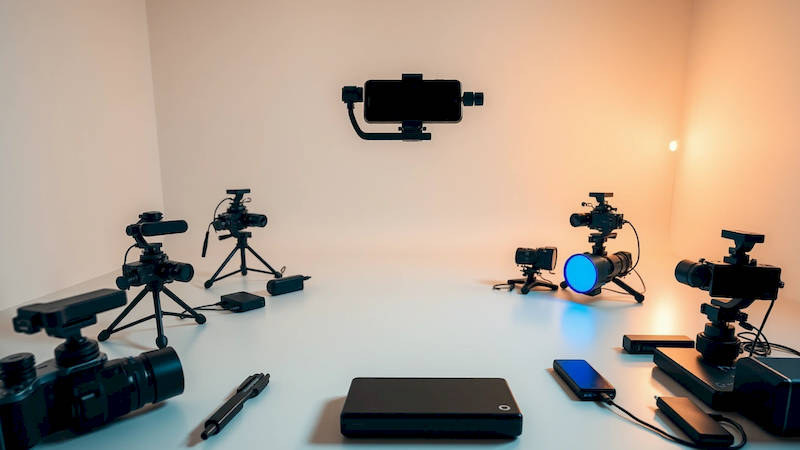
Time-lapse photography, the art of compressing extended periods into a captivating, short visual experience, has exploded in popularity. From showcasing the slow bloom of a flower to the bustling energy of a city, time-lapse offers a unique perspective on the world around us. But achieving stunning time-lapse footage isn’t just about pressing a button; it requires thoughtful planning and the right equipment. While smartphone time-lapse capabilities have improved, dedicated gear unlocks truly professional results. This guide dives deep into the cameras and accessories essential for creating compelling time-lapse sequences, catering to beginners and seasoned photographers alike. We’ll explore everything from camera selection to intervalometers, motion control systems, and the crucial role of stable power solutions.
The allure of time-lapse lies in its ability to reveal changes invisible to the naked eye. It’s a powerful storytelling tool utilized in documentaries, filmmaking, and even scientific research. Consider the iconic images of aurora borealis dancing across the night sky, cloud formations evolving over mountains, or construction projects rapidly taking shape – all brought to life through the magic of time-lapse. As technology advances, the barriers to entry for this captivating art form are lowering, but understanding the gear and techniques remains pivotal for achieving truly breathtaking results. This article aims to demystify the process and empower you with the knowledge to capture your own visual journeys through time.
Choosing the Right Camera for Time-Lapse
Selecting the correct camera is arguably the most important decision you’ll make. While almost any camera capable of taking photos can technically be used for time-lapse, certain features are incredibly beneficial. DSLRs and mirrorless cameras are the most prevalent choices due to their image quality, lens compatibility, and manual control options. Higher megapixel counts aren’t strictly necessary (16-24MP is often sufficient), but a good dynamic range is essential for capturing detail in varying lighting conditions. Crucially, the camera should offer good low-light performance to minimize noise in long exposures, especially for night time-lapses. Cameras with internal intervalometers are a significant advantage (more on those later).
Many modern cameras, like the Sony a7S III or Canon EOS R6, boast exceptional low-light capabilities and offer robust features like focus peaking and zebras, which become incredibly valuable when dealing with long exposures and complex scenes. The Blackmagic Pocket Cinema Camera series has also gained traction among time-lapse enthusiasts, thanks to its RAW recording capabilities and professional-grade features at a relatively affordable price point. However, consider the trade-offs; RAW footage requires substantial storage space and processing power. Ultimately, the “best” camera depends on your budget, desired image quality, and the specific type of time-lapse you intend to create.
A common misconception is that 4K or 8K is always better. While offering increased resolution, these formats demand significant processing power and storage. For many projects, particularly those intended for online platforms, 1080p is perfectly adequate and significantly more manageable. Prioritize image quality and dynamic range over sheer resolution, and also consider the camera's ability to maintain consistent exposure and white balance over extended periods - features often overlooked but crucial for a seamless time-lapse.
The Importance of Intervalometers and Automated Control
An intervalometer is a device – either built-in to the camera or external – that controls the timing between shots. This is the heart of time-lapse photography. The interval, measured in seconds or minutes, dictates how quickly or slowly the scene unfolds. Choosing the correct interval depends entirely on the subject matter. Fast-moving clouds might require an interval of 2-5 seconds, while the growth of a plant might necessitate intervals of 30 seconds to several minutes. A built-in intervalometer simplifies the process and reduces the need for external cables.
External intervalometers offer greater flexibility and are essential for cameras that lack integrated functionality. They often include features like unlimited shooting, exposure bracketing control, and the ability to program complex shooting sequences. However, relying solely on an intervalometer isn’t enough for complex shots. Motion control systems, discussed later, become crucial when you want to add pan, tilt, or other movements to your time-lapse. Advanced users can explore using camera control software on a laptop to trigger shots remotely and manage more intricate shooting schedules.
Understanding the relationship between interval, total duration, and frame rate is critical. For example, a 24-hour time-lapse at a 5-second interval will yield 2880 photos. To achieve a 30 frames-per-second (fps) video, you’d need to compress those 2880 photos into roughly 96 seconds of footage. This highlights the importance of careful planning and calculating the necessary number of frames to achieve your desired final length.
Lenses: Wide Angles, Zoom, and Creative Options
Lens choice dramatically impacts the aesthetic of your time-lapse. Wide-angle lenses are popular for capturing expansive scenes like landscapes, cityscapes, and star trails. They provide a broad field of view and emphasize a sense of scale. However, wide-angle lenses can introduce distortion, especially at the edges of the frame. Prime lenses, with their fixed focal lengths, generally offer superior optical quality and wider apertures compared to zoom lenses, which is beneficial in low light situations.
Zoom lenses provide versatility, allowing you to adjust the field of view without physically moving the camera. This is particularly useful for subtly revealing details or creating a dynamic effect over time. A zoom time-lapse can simulate a “dolly zoom” effect, adding visual interest without the need for complex motion control. Consider the minimum focusing distance of your lens; for close-up time-lapses of flowers or insects, a macro lens is essential.
Don't overlook the creative possibilities of specialty lenses. Tilt-shift lenses can be used to create miniature effects, while fisheye lenses can add a dramatic, distorted perspective. Experimentation is key. Remember that lens flare can be a significant issue in time-lapse, especially when shooting towards the sun. Using a lens hood is highly recommended.
Power Solutions: Keeping the Camera Running
Time-lapse photography is a power hog. Shooting thousands of photos over several hours (or even days) will quickly drain the camera’s battery. A reliable power solution is non-negotiable. The most common approach is using an AC adapter connected to a power outlet. However, this limits your shooting location to areas with access to electricity.
For remote locations, a portable power bank or external battery pack is crucial. Choose a power bank with a high capacity (measured in Wh – Watt-hours) and sufficient output voltage and amperage to power your camera. Dummy batteries are also excellent options; they plug into the camera’s battery compartment and draw power from an external source. One should also consider the efficiency of the power delivery system. Some adapters and power banks lose significant energy during the conversion process.
Before embarking on a long-duration time-lapse, thoroughly test your power setup to ensure it can sustain the camera for the required period. It’s always better to overestimate your power needs than to risk running out of battery mid-shoot. Dual power solutions—an AC adapter as a primary source and a power bank as a backup—can provide extra peace of mind, especially for critical projects.
Stability is Key: Tripods and Motion Control Systems
Camera shake is the enemy of time-lapse. Even the slightest movement can result in a jerky, unprofessional-looking sequence. A robust tripod is therefore indispensable. Look for a tripod with a sturdy build, stable legs, and a smooth pan-and-tilt head. Carbon fiber tripods are lightweight and durable but are generally more expensive than aluminum models.
For more advanced time-lapses, consider a motion control system. These systems automate camera movements, such as panning, tilting, and tracking, creating visually dynamic sequences. There are a wide range of motion control systems available, from simple pan-and-tilt heads to sophisticated robotic arms. These systems are controlled via software, allowing for precise programming of movement paths and speeds.
The level of complexity and expense of a motion control system depends on your needs. A simple pan-and-tilt head can add subtle movement to landscape time-lapses, while a more advanced system can be used to create complex tracking shots around a subject. Proper setup and calibration are crucial for achieving smooth, fluid motion.
Conclusion: Crafting Timeless Visuals
Time-lapse photography offers a powerful and rewarding creative outlet. Successfully capturing the passage of time, however, demands careful planning, the right equipment, and a dedication to detail. Focusing on selecting a camera with good low-light performance and manual control options is paramount. Combining this with a reliable intervalometer or built-in function, a versatile lens selection, a robust power solution and a stable tripod (or motion control system) sets the foundation for exceptional results.
Remember that the key to stunning time-lapse isn’t always the most expensive gear but rather the thoughtful application of the tools you have. Experiment with different intervals, lens choices, and camera movements to find your unique style. Don't be afraid to embrace challenges and learn from your mistakes. Start with simple projects, build your skills gradually, and most importantly, enjoy the process of revealing the hidden beauty of the world around us—one frame at a time. Your next time-lapse adventure awaits!
Deja una respuesta