
How to Use NFC Accessories with Your Smartphone for Daily Convenience
The world is becoming increasingly connected, and our smartphones are at the heart of this connectivity. While much focus is given to app downloads and software updates, a powerful technology quietly operating within most modern smartphones – Near Field Communication (NFC) – often goes underutilized. NFC allows for short-range wireless communication, enabling a surprisingly diverse range of applications beyond simply mobile payments. From streamlining home automation to simplifying data transfer and enhancing security, NFC accessories are transforming how we interact with our daily lives. This article delves deep into the world of NFC accessories, exploring their capabilities, compatibility considerations, practical applications, and the future of this rapidly evolving technology. Understanding and leveraging NFC can significantly improve convenience, efficiency, and even security in a multitude of scenarios.
The utility of NFC extends far beyond contactless payments, which are arguably its most well-known application. Accessory manufacturers are creatively leveraging NFC to build products that seamlessly integrate with our smartphones, offering hands-free control, quick connections, and innovative solutions to everyday problems. As NFC chipsets become more sophisticated and affordable, we can expect to see an explosion of innovative NFC accessories hitting the market. This article aims to provide a comprehensive guide to understanding and utilizing these accessories, offering practical advice and insights for maximizing their potential. It will delve into both current applications and tease out potential future developments, providing a roadmap for readers to navigate this exciting technological landscape.
This isn’t simply about adding “another gadget” to your tech collection. It’s about intelligently layering convenience and functionality onto a device you already use constantly. Consider the repetitive tasks many of us perform daily – unlocking doors, adjusting smart home devices, sharing contact information, or pairing Bluetooth speakers. NFC accessories aim to make these processes instantaneous and effortless, reducing friction and freeing up valuable time. This is particularly important in an increasingly fast-paced world where efficiency and simplicity are highly prized. The possibilities, as we'll explore, extend to healthcare, retail, and beyond, illustrating the truly transformative potential of NFC technology.
- Understanding NFC Technology and Your Smartphone’s Capabilities
- Common Types of NFC Accessories and Their Uses
- Setting Up and Pairing NFC Accessories: A Step-by-Step Guide
- Security Considerations and Best Practices for NFC Use
- Troubleshooting Common NFC Accessory Issues
- The Future of NFC Accessories: What’s On the Horizon?
- Conclusion: Embracing NFC for a Smarter, More Connected Life
Understanding NFC Technology and Your Smartphone’s Capabilities
At its core, NFC is a set of communication protocols that enable two electronic devices to exchange data when they are brought within a few centimeters of each other. It's based on the principle of inductive coupling, meaning data transfer happens through electromagnetic fields. While often compared to Bluetooth, NFC has a significantly shorter range, making it inherently more secure for transactions, as proximity is required. Modern smartphone NFC chips aren't simply for payments; they can act as both readers and emulators, meaning they can read NFC tags found in accessories and emulate an NFC card for functionalities like access control.
However, not all smartphones are equally equipped to handle NFC accessories. While the vast majority of contemporary models support NFC, the placement of the NFC antenna can vary significantly between manufacturers and even different models within the same brand. This placement dictates where you need to position your smartphone on an NFC accessory for successful communication. Most manufacturers provide information on antenna location on their websites or in the user manual. Some devices also offer customization options within the settings to adjust NFC behavior, for example, prioritizing NFC for payments or enabling it for data transfer. According to a 2023 study by Statista, NFC-enabled smartphone shipments reached 90% globally, highlighting its widespread adoption.
Crucially, it's also important to understand the different NFC tag types (NTAG213, NTAG215, NTAG216, etc.). These tags vary in their storage capacity, security features, and writeability. Most NFC accessories utilize readily available tags, but understanding the differences can be helpful when customizing tags or using them for more complex applications. Apps like NFC Tools (available on both Android and iOS) can scan and analyze NFC tags to reveal their characteristics.
Common Types of NFC Accessories and Their Uses
The landscape of NFC accessories is rapidly expanding, but several categories are emerging as particularly popular. NFC tags, perhaps the most fundamental of these, are small, sticker-like devices that can be programmed with specific actions. These actions can range from launching a specific app, connecting to a Wi-Fi network, or even sending a text message. Smart rings and bracelets utilizing NFC offer an elegant way to store and transfer information, often used for access control and digital business cards. NFC-enabled Bluetooth speakers and headphones facilitate instant pairing with your smartphone simply by tapping the devices together.
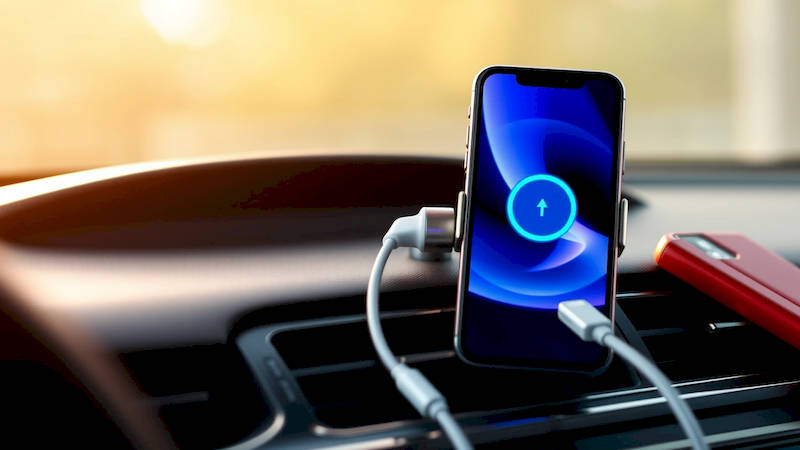
Beyond these, more specialized accessories are gaining traction. NFC-enabled car mounts can automatically launch navigation apps when your smartphone is placed on the mount. NFC-powered door locks streamline access control by allowing you to unlock your door with a simple tap of your phone. Healthcare professionals are utilizing NFC-enabled medical devices to quickly access patient data and monitor vital signs. “We are seeing a strong increase in the use of NFC in medical wearables, primarily due to its simplicity and reliability for data transfer,” notes Dr. Emily Carter, a specialist in wearable technology at Stanford University’s Medical Center. Additionally, businesses are increasingly leveraging NFC-enabled business cards to facilitate seamless contact sharing.
Finally, there’s a growing market for NFC-enabled stickers designed to enhance smart home automation. These stickers can be programmed to control lights, adjust thermostats, or even trigger complex routines with a single tap.
Setting Up and Pairing NFC Accessories: A Step-by-Step Guide
The process of setting up and pairing NFC accessories is generally straightforward, but it can vary slightly depending on the accessory and your smartphone. First, ensure that NFC is enabled in your smartphone’s settings. On Android, this is typically found under “Connections” or “Wireless & Networks.” On iOS (iPhone 7 and later), NFC is primarily used for Apple Pay, but Core NFC framework allows developers to use it for other purposes. However, the level of control and customization available on iOS is more limited compared to Android.
Next, download any companion apps recommended by the accessory manufacturer. These apps often provide a user-friendly interface for programming NFC tags or configuring device settings. For NFC tags, you’ll typically use an app like NFC Tools (Android) or TagWriter by NXP (iOS) to write data to the tag. Simply open the app, choose the desired action (e.g., launch an app, open a URL, write text), and tap the tag to your smartphone. For accessories that require pairing, like Bluetooth speakers, simply enable pairing mode on the accessory and then tap your smartphone to the designated NFC point on the device.
Debugging pairing issues often involves verifying that NFC is enabled, ensuring the accessory is properly positioned, and restarting both the smartphone and the accessory. Some accessories may require specific permissions within your smartphone's settings, so carefully review the accessory's documentation. Always ensure the NFC tag is not obscured and the smartphone is correctly aligned to the NFC antenna for reliable data transfer.
Security Considerations and Best Practices for NFC Use
While NFC is generally considered a secure technology, it’s important to be aware of potential vulnerabilities. The short range of NFC communication inherently limits the risk of eavesdropping, but “eavesdropping” can still be possible with specialized equipment. Relay attacks, where an attacker intercepts and relays NFC signals, are a rare but potential threat. Ensure you're only interacting with NFC accessories from trusted sources. Avoid tapping your phone on unknown NFC tags or readers, as these could potentially compromise your data.
Protecting your personal information stored on NFC tags is crucial. Avoid storing sensitive data like passwords or credit card numbers directly on the tag. Instead, use NFC tags to trigger actions that require additional authentication, such as launching a password-protected app. Regularly review the data stored on your NFC tags and delete any information that is no longer needed.
Furthermore, be mindful of your smartphone's NFC settings. Some devices allow you to disable NFC when not in use, further enhancing security. Regularly updating your smartphone’s operating system and security software is also crucial to protect against potential vulnerabilities. "Layered security is vital when incorporating NFC into your daily routines," emphasizes cybersecurity expert Alex Miller. "Combining NFC with strong passwords and multi-factor authentication provides a robust defense against potential threats.”
Troubleshooting Common NFC Accessory Issues
Even with proper setup, you may occasionally encounter issues with NFC accessories. One common problem is failed pairing. This is usually caused by incorrect NFC antenna placement, low battery levels in the accessory, or software glitches. Ensure your smartphone’s NFC is enabled, the accessory is within range, and both devices have sufficient power. Trying a different phone or accessory can help isolate the problem.
Another issue is inability to read or write to NFC tags. This can be due to a corrupted tag, a malfunctioning smartphone NFC chip, or interference from other electronic devices. Try scanning the tag with a different smartphone or using a different app. If the tag is repeatedly unreadable, it may be damaged and need replacement.
Finally, some accessories may experience compatibility issues with certain smartphones. Check the accessory manufacturer's website for a list of compatible devices. Software updates can sometimes resolve compatibility issues, so ensuring both your smartphone and the accessory have the latest software is always a good starting point. If problems persist, contacting the manufacturer’s support team is often the best course of action.
The Future of NFC Accessories: What’s On the Horizon?
The future of NFC accessories is brimming with potential. We can expect to see increased integration of NFC into everyday objects, from furniture and appliances to clothing and packaging. The development of more sophisticated NFC tags with increased storage capacity and improved security features will unlock new and innovative applications. Researchers are also exploring the use of NFC for enhanced authentication and identity verification, potentially eliminating the need for passwords altogether.
Furthermore, the convergence of NFC with other technologies, such as Bluetooth and Ultra-Wideband (UWB), will create even more powerful and versatile accessories. Imagine a smart home system that uses NFC for initial setup and UWB for precise location tracking. "The blending of NFC, Bluetooth and UWB will unlock a new era of seamless device interaction," predicts tech analyst Sarah Chen. "This synergistic approach will pave the way for truly intelligent and responsive environments." We are also likely to see wider adoption of NFC in the healthcare sector, enabling more convenient and accurate patient monitoring.
Conclusion: Embracing NFC for a Smarter, More Connected Life
NFC technology offers a surprisingly powerful and versatile toolset for streamlining daily life. From simplifying payments and access control to enhancing smart home automation and improving data sharing, NFC accessories are poised to become increasingly integral to our connected world. By understanding the fundamentals of NFC, exploring the diverse range of available accessories, and following best practices for security and troubleshooting, you can unlock the full potential of this transformative technology.
The key takeaways are to verify NFC compatibility with your smartphone, carefully choose accessories from reputable brands, prioritize security by avoiding storing sensitive data directly on tags, and keep both your devices and accessories updated with the latest software. The future of NFC is bright, moving beyond basic functionality into complex, integrated systems that promise to make our lives easier, more efficient, and more secure. Taking the time to learn about and leverage NFC technology is a proactive step toward embracing a smarter, more connected future.
Deja una respuesta